Compliance and Security by Design for Startups: ISO, GDPR, and Anti-Bot
Discover how to structure your startup's security from the beginning (by design). Practical tips on IP protection, ISO 27001, GDPR, and AI defenses.
Actionable guides and insights on startup acceleration, custom software engineering, MVP validation, and technology innovation.
Explore app development cost research, SaaS valuation models, Lean Startup methodologies, software architecture, and governance frameworks to scale your business smartly.

Discover how to structure your startup's security from the beginning (by design). Practical tips on IP protection, ISO 27001, GDPR, and AI defenses.

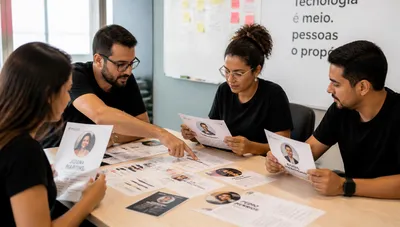
A silent team is not an aligned team — it is a team with hidden risk. This guide shows what psychological safety really is, why it does not mean permanent comfort, which other layers of safety sustain a professional beyond the physical, and the rituals that turn questions, dissent and errors into learning.

A flood that closes the street, a three-day blackout, a critical supplier halted. Learn how to map physical and transition climate risks, measure exposure, and integrate it all into business continuity.

Discover how to structure corporate suitability in your startup from day zero. A practical guide integrating compliance, supplier and partner due diligence, OECD corporate governance, LGPD, and anti-corruption to accelerate enterprise sales and fundraising.

Organicity is not algorithm luck: it is a growth strategy planned on day zero to transform customers into a network. See the difference between audience, community, and network, rituals, roles in each phase, and the realistic 3 to 5-year plan.

Learn to build your Minimum Viable Product strategically, validating your idea with the lowest possible investment before scaling. Complete guide with examples from Dropbox, Airbnb and Zappos.

Environmental traceability means proving the origin, custody, and impact of each batch with auditable data. See the architecture from sensor to ESG report, when each technology makes sense, and how GS1 and EUDR affect supply chains.

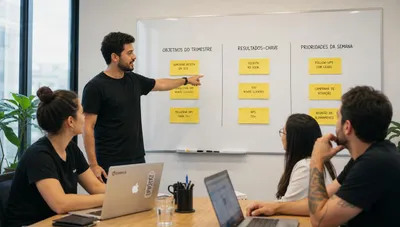
Most startups don't die from a lack of strategy, but because the strategy never reaches the team's calendar. See how to write useful OKRs, prioritize under pressure, sustain accountability rituals, and operate a monthly execution cadence.

Ping-pong tables and free beer don't retain talent or fix bad management. Discover how to apply eNPS, psychological safety, and the science of well-being in startups.

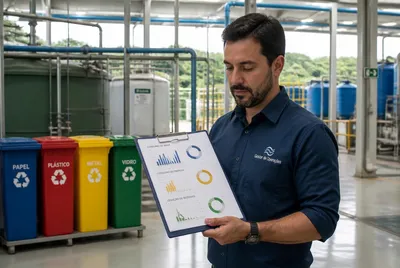
Eco-efficiency is delivering more value with fewer natural resources. See how to measure water, energy, materials, and waste alongside financial indicators, prioritize initiatives by return, and avoid the rebound effect.

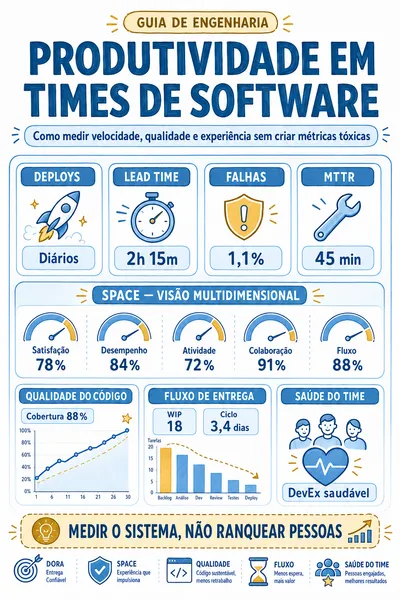
Lines of code and logged hours don't measure the real value of engineering. Discover how to apply DORA, SPACE, flow metrics, and AI to accelerate deliveries without micromanagement.

Process sluggishness destroys customer experience and erodes startup runway. Learn how to measure lead time and cycle time, eliminate unnecessary approvals, apply WIP limits, and diagnose bottlenecks in one week without losing human quality.

Software has no smokestack, but it has an energy bill. How to measure PUE, carbon intensity, and Software Carbon Intensity, choose processing region and time, and apply GreenOps to reduce cloud cost and AI emissions without losing performance.

Yield is not about working more hours: it is about converting installed capacity into delivered value and revenue. See how to calculate revenue per employee and throughput per team, separate capacity from occupancy and value delivery, measure performance without encouraging excessive working hours, combine DORA and SPACE metrics with financial indicators, find process bottlenecks, and build a balanced yield dashboard.

Authority is no longer just perception; it has become infrastructure: it decides if your startup is cited on Google, retrieved by RAG systems, and mentioned in AI-generated answers. See what makes a company be recognized as an authority, how E-E-A-T influences trust and search, what kind of content is easy to cite, how to turn first-hand experience into original evidence, and the SEO, AEO, and GEO checklist before publishing.

Carbon has become business information: it goes into contracts, due diligence, and RFPs. See what decarbonization is, what net zero really requires, how to separate scopes 1, 2, and 3 by the GHG Protocol, how cloud, travel, suppliers, and hardware enter the inventory, what to reduce before offsetting, and how to build the first emissions inventory.

A startup doesn't die from a lack of ideas: it dies from running out of cash in a month that was already predictable three quarters prior. This guide shows what a startup budget must show, how to calculate monthly burn rate and runway, separate CAPEX, OPEX, and variable costs, build conservative, base, and aggressive scenarios, when to use zero-based budgeting and rolling forecast, and a monthly budget review model for founders.

Pulling all-nighters and working 80-hour weeks aren't badges of honor in startups: they are severe process and management architecture failures. This comprehensive guide examines how to diagnose exhaustion in founders and developers, build psychological safety without medicalizing operational issues, and implement an ethical sanity plan. Discover the silent warning signs of burnout, understand why vanity metrics and constant pressure destroy profitability, and learn vital tools to protect the most valuable asset of any scaling business: your team's cognitive capacity and health.

Circularity is not the pretty phase of the sustainability report: it is a product architecture decision that changes cost, margin, and recurrence. See what differentiates circular economy from recycling, how to map the life cycle of physical and digital products, where waste and obsolescence are born, which circular models are viable in a startup, and how to measure circularity with simple indicators.

High revenue doesn't mean high return. This guide separates profitability from return on investment, shows how to calculate ROI, ROIC, payback and contribution margin, explains which unit economics metrics really matter in SaaS and services, and delivers a checklist to decide where to reinvest every dollar of cash. Find out why high-revenue companies still fail, how to spot the financial bottleneck before it shows up on your bank statement, and which concrete levers increase profitability without compromising growth.

Sorority is not about liking everyone: it's deciding that no woman will face gender-based barriers alone. See how to turn this into management practice — support networks, mentoring, sponsorship, safe channels, and metrics by hierarchical level.

Conservation is no longer just enforcement; it has become data engineering. See how IoT, field sensors, and remote sensing monitor water, soil, air, and biodiversity, how to turn this into alerts and decisions, which business models work, and how to validate an environmental PoC with scientific partners.

Doing things fast, doing the right things, and generating impact are three different things. See how to separate output, outcome, and impact, which KPIs show activity and which show results, and how to connect OKRs to the value delivered to the customer.

Reciprocity is not an exchange of favors: it is the habit of delivering value before charging. See how to apply it with customers, team, and partners, how communities and referrals create network effects, and which metrics show trust, loyalty, and advocacy.

Pollution is only manageable when it becomes a number. See which indicators ISO 14031 recommends, how to measure waste, energy, water, emissions, and effluents, how to translate ISO 14001 requirements into operational goals, and how to build a monthly environmental performance dashboard.

Utilization is the most sensitive economic indicator of a software house: get it wrong on the low end and the margin disappears, get it wrong on the high end and quality drops. See how to separate billable hours from internal investment, calculate capacity and idleness, define goals by role, and build a weekly allocation dashboard.

High turnover is not an HR problem, it is a unit economics problem. See how to calculate the monthly and annual rate, how much it really costs to replace a person in a startup, what signs anticipate resignation requests, and a practical 30, 60, and 90-day plan to retain talent.

Sustainability has stopped being just talk and has become engineering: reducing inputs per unit produced without losing productivity. See the 3 pillars, the dispute between planned obsolescence and dematerialization, the role of agribusiness, the digital revolution, and how precision systems turn data into real savings.

Discover how to turn your startup or software house into a highly profitable operation in 2026. Learn to master unit economics, optimize gross margin, and eliminate capital waste.

Equity is not equality — it's giving each person what they need to compete on an equal footing. Learn how to apply this to salaries, opportunities, and equity division among your startup's partners.

Discover how NFTs and Smart Contracts revolutionized the management of high-value assets, from the music market to sports and real works of art, going far beyond the fever of collectible images.

Effectiveness is not doing more — it's doing what matters. Learn how to define the right KPIs by startup stage, avoid vanity metrics, and use dashboards to make game-changing decisions for your business.

Despite being treated as a 'minority', women, Black people, LGBTQIA+ and PwD together make up the majority of the Brazilian population — but the tech market is still designed and led by the minority group. This is the guide for founders who want to build a startup with diversity from day 1.

Urban agriculture and online fairs are no longer a trend; they are one of the most promising models for founders looking to unite profit, environmental impact, and real proximity to the customer.

A practical and complete guide with the 9 essential steps to improve your business performance in 2026: personas, innovation, competition, knowledge management, agile leadership, product, digital marketing, metrics, and valuation.

Sustainability reduces harm. Regeneration gives back more than it takes. Learn how to measure your company's impact with SROI, re-evaluate operations, and replace inputs to thrive under resource scarcity.

Building an app goes beyond writing clean code. It involves cost, team assembly, accessibility, universality, and embracing inclusion as a core competitive advantage.

São Carlos concentrates more PhDs per capita than any city in Brazil, hosting USP, UFSCar, ParqTec, Embrapa, and Onovolab. Discover why this city is Latin America's deeptech capital.

What an LMS is, essential modules, how AI is transforming student support, and why Shinier provides Ametista to partner software houses to skip 12 months of development.

Why so many startups started wrong, how the Startup Legal Framework simplified business incorporation, step-by-step digital setup, and why being in an innovation hub like São Carlos is worth more than initial capital.

Smart bootstrapping in 2026: understand if your startup is a chicken (cheap & agile), sheep (specialist), or cow (capital-intensive). Discover stage investment costs for MVP, Beta, and V1, and why financial sustainability is now mandatory.

Increase your productivity and turn your software house into a startup factory. Discover the 2026 Scrum stages powered by Shinier.

In the current scenario, scalability has evolved. It's not just about resources, but how Agentic AI and bootstrapping models can accelerate your business without losing financial autonomy.

Complete guide on mockups: from the difference between wireframe, mockup, and prototype to AI tools to validate your idea with real clients before investing in development.

Learn how to create a complete and professional business plan for your startup. Guide with all essential sections to present to investors.

Understand what a Proof of Concept is, when to use it in deep tech, IoT, and AI projects, and explore real technical validation case studies.

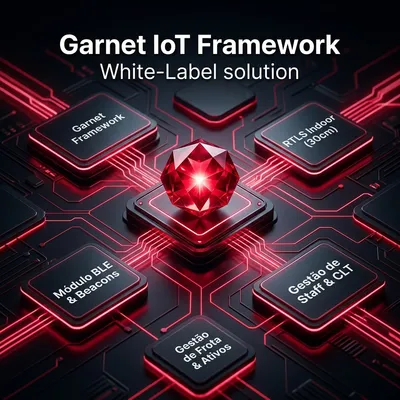
In 2026, industrial efficiency is measured by data precision. Discover how the Garnet framework became the core geolocation and automation engine for modern software houses.

The definitive guide to protecting your software in 2026. From IP registration to AI protection and LLM models, learn how to strategically bulletproof your business.

Updated 2026 price guide with clear investment tiers, native vs cross-platform comparison, requirement gathering tools, nearshore cost advantages for US businesses, and real case studies.

Definitive guide with updated price tables, factors influencing software development cost, and strategies to optimize your corporate software budget.

Complete and updated 2026 guide on website development costs. Discover prices for corporate sites, e-commerce stores, landing pages, web apps, and professional blogs.

Complete updated guide to APIs: what they are, how they work, architecture types (REST, SOAP, GraphQL, WebSocket), practical code examples, security, and webhooks.

Discover Opal WMS: real-time inventory control, RFID, SAP and Salesforce integration. Explore system screens and learn how to optimize your logistics.

Discover how Jade LiMS transforms supply chain management with real-time monitoring, IoT, and artificial intelligence for precision agriculture and Industry 4.0.

Agribusiness accounts for nearly 30% of Brazil's GDP and is starving for digital innovation. Learn how to build a successful startup in this multi-billion dollar market.

Have you had a business idea for months (or years) but don't know where to start? This definitive guide will show you the 7 proven steps to overcome paralysis and finally turn your vision into a real project.

In 2026, financial capital became a commodity. The real competitive advantage lies in intellectual and technological execution capital. Discover Shinier's Venture Studio methodology.

Calculate your SaaS startup valuation with our 2026 guide, free spreadsheet templates, 16 valuation methods, and Shinier's USP-validated Financial Viability Methodology.

Discover how Agentic AI and LLM testing are transforming QA in 2026. A complete guide on levels, types, strategies, and automated testing.
Get practical guides, tech insights, and startup resources delivered straight to your inbox.