
Circular Economy for Startups: How to Reduce Waste and Create New Revenue
Circularity is not the pretty phase of the sustainability report: it is a product architecture decision that changes cost, margin, and recurrence. This guide shows what differentiates circular economy from recycling, how to map the life cycle of physical and digital products, where waste and obsolescence are born, which circular models are viable in a startup, and how to measure circularity without turning it into a consulting project.
The economic model we learned to operate is linear: extract, produce, use, and discard. It works as long as raw materials are cheap, energy is abundant, and the product's final destination is someone else's problem. None of these three premises hold up anymore — and that is why the circular economy is no longer an environmental agenda, but a business model agenda.
The UNEP's Global Resources Outlook 2024 shows that global material extraction has more than tripled in five decades and accounts for a dominant share of greenhouse gas emissions and biodiversity loss. Translating to the language of an entrepreneur: inputs tend to become more expensive, more regulated, and scarcer, while waste tends to become more expensive to dispose of. Anyone designing a product ignoring this is building a liability directly into their cost structure.
This guide follows the practical path: the real difference between circularity and recycling, how to map the life cycle of a physical or digital product, where waste, disposal, and obsolescence emerge, how ecodesign and repairability generate new revenue, which circular models work for a startup, how to measure circularity with simple indicators, and a checklist to launch an MVP with less waste.
💡 The biggest mistake founders make: treating circularity as an end-of-pipe initiative — a collection program, a seal, a campaign. Circularity that brings returns is decided in the design phase, before the first prototype, when it is still cheap to change the material, the assembly, and the pricing model.
What is the circular economy and how does it differ from recycling?
The Ellen MacArthur Foundation defines the circular economy by three principles: eliminate waste and pollution by design, keep products and materials in use at their highest value, and regenerate natural systems. Notice that recycling does not appear as a principle — it is only one of the routes, and the one with the lowest recovered value.
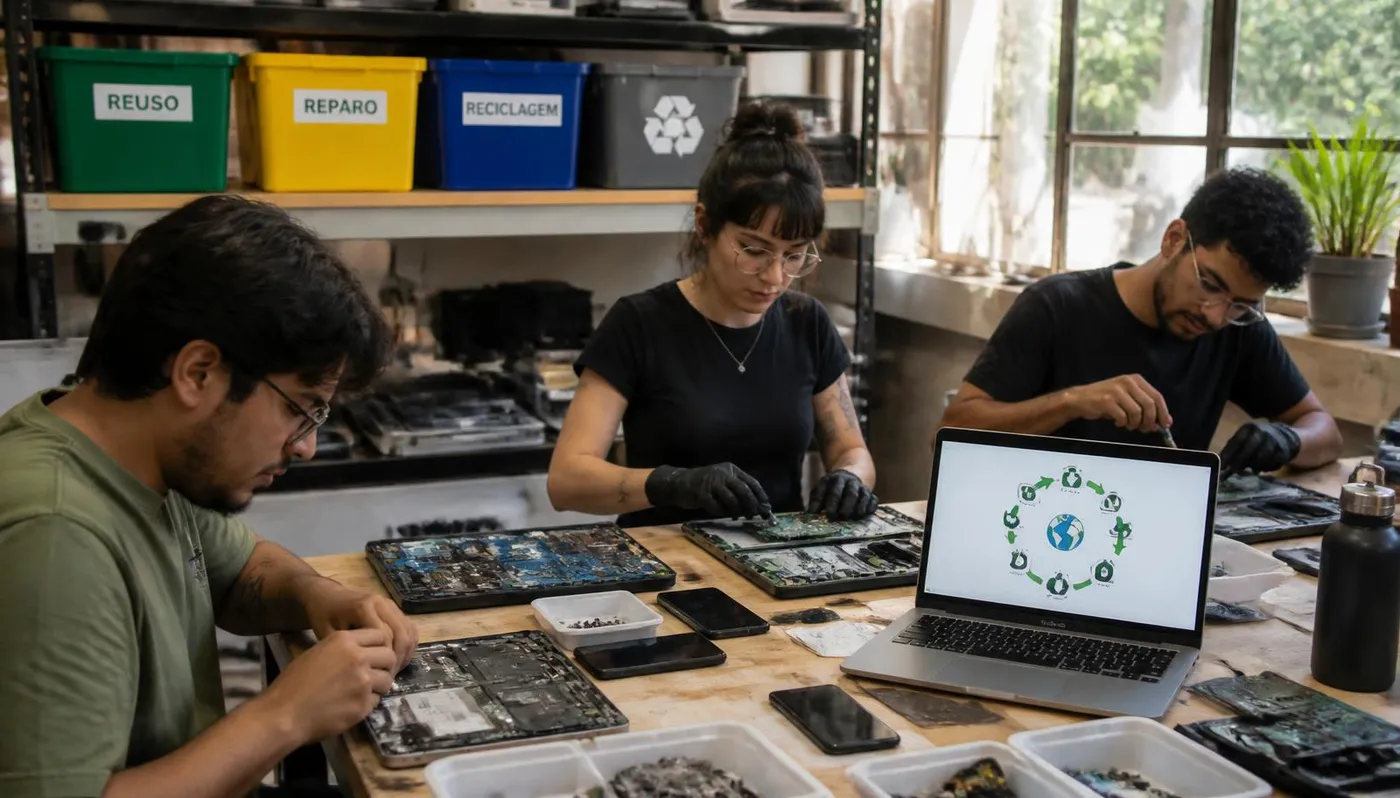
The hierarchy matters. A laptop that returns to the market refurbished preserves the engineering value of thousands of components. The same laptop shredded to recover copper and aluminum returns a few dollars in metal and destroys everything else. Brazil's National Solid Waste Policy enshrines this order: do not generate, reduce, reuse, recycle, treat, and, only as a last resort, dispose. Walter Stahel summarized the economic logic in a single sentence: it is cheaper to maintain value than to recreate it.
Short cycle: keeping the whole product in use
Maintenance, repair, firmware updates, resale of pre-owned items, and usage subscriptions are the routes that preserve most of the value invested in design, assembly, and logistics. Each additional use cycle dilutes the original production cost over more months of service rendered — that is where margin appears without needing to produce a new unit.
The question that separates discourse from the model
Before announcing any circular commitment, answer this: if the customer uses your product for twice as long, does your revenue drop or rise? If it drops, the business model is structurally linear and no collection campaign will change that. If it rises — because you charge by use, by subscription, by service, by replacement part, or by reselling a pre-owned item —, circularity has ceased to be a cost and has become a revenue engine.
Want to design a circular product from the first prototype?
Shinier accelerates tech startups with a method: persona, requirements, proof of concept, architecture, and roadmap. In circularity, this means deciding on materials, modularity, pricing models, and return flows while it's still cheap to change — and not after the first batch is produced.
For early-stage founders
Use the platform's requirements, project model, and roadmap tools to design your MVP with less waste, a mapped lifecycle, and recurring revenue.
For mature companies
Need to track reverse logistics, manage spare parts, or prove waste diversion with auditable data? Talk to the Shinier team.
How to map the life cycle of a physical or digital product?
Mapping the life cycle is listing, step by step, what goes into and what comes out of your product — energy, materials, water, transport, waste — from the cradle to its final destination. You don't need to start with a full, certified Life Cycle Assessment; it begins with an honest drawing on a piece of paper, reviewed by whoever operates each step.
Digital products do not escape this. A SaaS consumes servers, cooling, networks, and — most importantly — user devices. Software that demands new hardware every two years pushes e-waste onto the customer. Infinite log retention, heavy assets, unoptimized builds, and auto-playing videos are digital waste with a physical counterpart.
Materials and Origin
What materials make up each part, where they come from, how much recycled content exists, which are critical or scarce, and which prevent separation at end-of-life (glues, composites, mixed plastics).
Production and Packaging
Material loss in the process, scrap, offcuts, primary and secondary packaging, use of disposable protective plastic, and volume transported per unit delivered.
Use
Energy and supply consumption during operation, maintenance frequency, parts availability, software updates, and the average time until the user considers the product obsolete.
Post-Use
What happens when the customer stops using it: does it sit in a drawer, get resold, get returned, become common trash, or enter a formal reverse logistics channel with traceability and receipts.
Rule of thumb: if you can't say where the units sold two years ago are today, you don't have a life cycle map — you have a sales map. Circularity requires knowing what happens after invoicing, and that is a product decision: serial numbers, warranty registration, optional telemetry, or an explicit incentive to return it.
Where do waste, disposal, and obsolescence emerge?
Waste rarely appears as a single, visible event. It is distributed across small decisions that no one revisits: a cutting tolerance, a material chosen by habit, a soldered part instead of a screwed one, a contract that pays for volume sold instead of results delivered. E-waste is the most educational example: it grows faster than any other domestic waste stream and concentrates valuable materials that are lost when there is no return channel.
Planned obsolescence
Components designed to fail within a predictable horizon, glued batteries, lack of spare parts in the market, and early end of support. It deliberately shortens lifespan and shifts the environmental cost to the user.
Perceived obsolescence
The product works, but marketing convinces you it's old. Annual cosmetic releases, artificial accessory incompatibility, and product line discontinuation create disposal without any technical failure.
Software obsolescence
Updates that require more powerful hardware, apps that abandon older OS versions, and proprietary formats that lock in data. It is the main cause of premature disposal of still-functional devices.
Operational waste
Production scrap, obsolete inventory, oversized packaging, returns without a refurbishing process, and discarded samples. It costs cash today and waste tomorrow, and is almost never measured separately.
How do ecodesign, repairability, and reuse generate revenue?
Ecodesign is designing with the entire life cycle in mind: less material, separable materials, reversible assembly, standardized parts, available documentation, and software updates instead of hardware replacement. The environmental gain is a consequence; the commercial gain is direct.
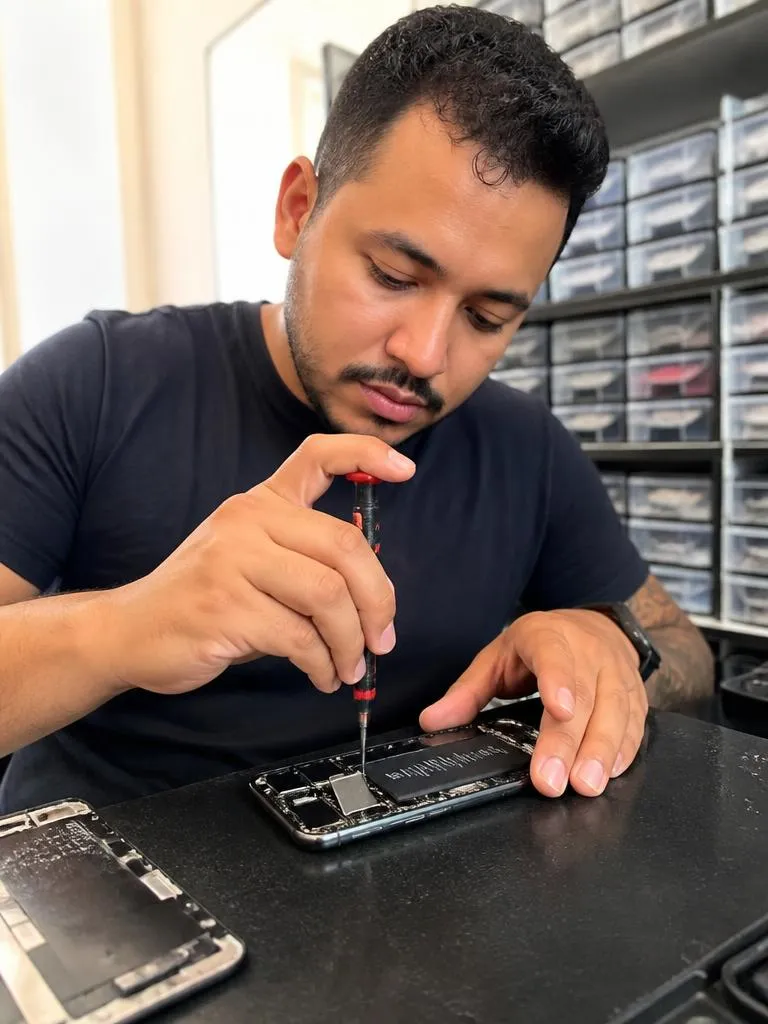
A repairable product opens three revenue streams that a disposable one does not: selling parts and kits, a maintenance service with recurring margin, and a certified pre-owned market with its own warranty. A modular product reduces support costs because it swaps a module instead of the whole unit. And a product with tracked returns turns every past customer into a raw material source with a known acquisition cost.
Parts, kits, and repair
A parts catalog, repair guides, and an authorized network create continuous revenue per installed unit, in addition to reducing churn: customers who can repair their items don't switch brands.
Pre-owned and trade-in
Buying back the used product with store credit ensures a return flow, feeds the refurbished line, and captures an audience that wouldn't buy the new item.
Software updates
Delivering new performance and features to existing hardware extends lifespan, sustains subscriptions, and prevents the disposal spike with every product generation.
By-products and symbiosis
One process's waste is another's input. Mapping who buys your leftovers — and at what price — converts disposal costs into a revenue stream, or at least into zero cost.
Which circular models work for startups?
Not every circular model fits into a young company with short cash runway and no collection scale. The five below are the most sustainable at an early stage because they require more contract and software design than industrial plant investments.
Product as a Service (PaaS)
The customer pays per use or per result, and you retain ownership of the asset. This flips the incentive: durability, efficiency, and preventive maintenance now increase your margin instead of reducing your revenue. It requires asset tracking, a clear liability contract, and forecasting maintenance costs over the cycle.
Refurbishing and Remanufacturing
Buy, recover, and resell with a warranty. Works well for electronics, professional equipment, and corporate furniture. The bottleneck is always triage: without objective classification criteria, inventory fills up with unrecoverable items and the model stalls.
Reuse and Parts Marketplace
Connect those who have surplus with those who need inputs, charging a commission, curation, or logistics fee. It is the most capital-light model, but depends on liquidity on both sides and a minimum standardization of item descriptions to build trust.
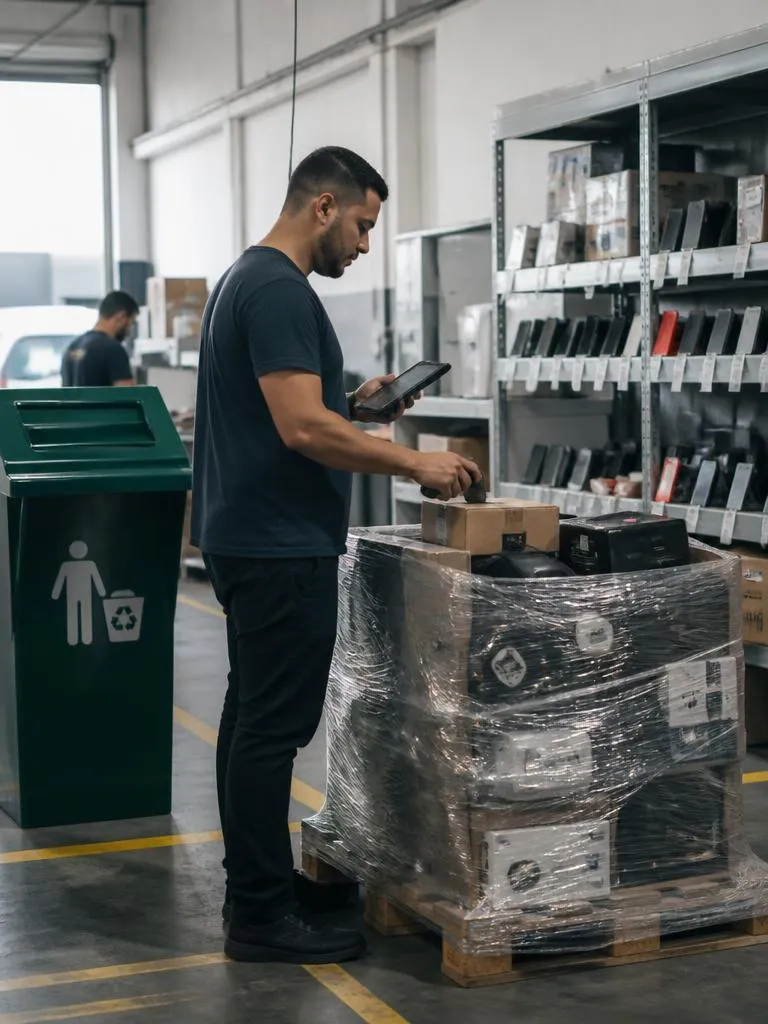
Reverse Logistics as a Service
Operate collection, traceability, and proof of destination for companies bound by environmental laws (like Brazil's PNRS). The sale is to those who need to comply with legal or reporting requirements, which provides a defined budget and a predictable buying cycle.
Traceability Software and Product Passports
Log composition, origin, repair history, and final destination of each unit. It is the layer that makes all previous models auditable — and the one closest to a pure software startup without its own physical operations.
How to measure circularity with simple indicators?
The GRI 306 standard organizes waste reporting into three blocks: how much is generated, how much is diverted from disposal, and how much goes to disposal — always with a description of impacts along the value chain. You don't need to report using the full standard from month one, but you need to measure with the same logic, or the numbers won't survive the first due diligence.
| Indicator | How to calculate | What it reveals |
|---|---|---|
| Landfill diversion rate | Waste diverted ÷ total waste generated | How much of your waste finds a higher-value destination than a landfill. |
| Average lifespan in use | Sum of months in operation ÷ units activated | Whether the product is lasting longer or shorter with each generation. |
| Circular revenue | Revenue from reuse, repair, parts, and subscriptions ÷ total revenue | Whether circularity is already a business model or still just talk. |
| Recycled content | Mass of recycled material ÷ total product mass | Dependence on virgin raw materials and exposure to commodity pricing. |
| Return rate | Units received back ÷ units sold in the period | Whether the reverse logistics channel actually exists or is only in the contract. |
| Repairability index | Replaceable parts ÷ total parts, weighted by repair time | How much of the product can be recovered without discarding the unit. |
Beware of a pretty number: a high diversion rate with total mass growing fast means you are just recycling more of a bigger problem. Always report the relative indicator alongside the absolute one — and alongside the unit of service delivered, which is what allows honest comparison between periods.
Checklist to launch an MVP with less waste
A circular MVP is not a more expensive MVP — it is an MVP with fewer irreversible decisions. Go through the points below before locking in the scope of the first batch or the first production version.
Define the unit of service, not the product unit
Write down what the customer actually buys (operating hours, cycles, deliveries, result). This opens the door to charging by use and aligns durability with margin from day zero.
Choose separable materials and avoid permanent joints
Screws instead of glue, mono-materials instead of composites, standard fittings instead of exclusive parts. Each of these decisions determines whether there will be a second life or not.
Design for disassembly in minutes
Time it. If it takes longer to open than to replace the whole unit, the repair won't happen in the real world, no matter how good the intention is.
Reduce packaging and standardize volume
Minimum protective packaging, returnable when possible, and sized for the transport mode. Empty volume transported is pure cost and guaranteed waste.
Identify each unit from the first batch
Serial number, QR, or label with composition and date. Without ID there is no smart warranty, repair history, trade-in, or proof of destination.
Design the return path before selling
Who collects it, who pays the freight, where it is sorted, what the refurbishing criteria are, and what receipt is generated. Reverse logistics improvised after the sale costs three times as much.
Treat software as a lifespan factor
Define for how many years there will be updates, which OS versions will be supported, and how the customer exports their own data. Long support is the cheapest way to avoid premature disposal.
Measure three indicators from the MVP onwards
Diversion rate, average lifespan, and circular revenue. Three numbers collected consistently are worth more than a complete report done only once.
Frequently Asked Questions
- Is circular economy the same as recycling?
- No. Recycling is the last resort before disposal: it breaks down the material to recover part of its value, almost always with a loss of quality and high energy consumption. Circular economy starts much earlier, in design, preventing waste from existing and keeping the product, component, and material in use for as long as possible and at its highest value.
- Does a software startup also need to think about circularity?
- Yes. Digital products have a physical footprint: servers, data traffic, user devices, and hardware that is replaced prematurely because the software became too heavy. Code efficiency, support for older devices, data retention, and infrastructure choices are circularity decisions.
- Is reverse logistics mandatory in Brazil?
- For several supply chains, yes. Law No. 12.305/2010 establishes shared responsibility for the life cycle and mandates reverse logistics systems in sectors such as electronics, batteries, tires, lamps, lubricating oils, and pesticides, with sector agreements and complementary regulations.
- How to measure circularity without turning it into a consulting project?
- Start with three numbers you can already collect: rate of waste diverted from disposal, average lifespan in use, and percentage of revenue coming from reuse, repair, or remanufacturing. Then evolve to recycled content, return rate, and material intensity per unit of service delivered.
Closing the loop: circularity is not about producing less, it's about extracting more value from each unit that already exists. A startup that learns to generate revenue two, three, four times from the same product is not just reducing waste — it is building a revenue structure that is more resilient to input price shocks, regulations, and supply chain crises.
Referências
- ELLEN MACARTHUR FOUNDATION. Circular Economy Introduction. It is the reference because it consolidated the operational definition of the circular economy used today by companies, regulators, and investors: eliminate waste and pollution by design, keep products and materials in use at their highest value, and regenerate natural systems. It is the conceptual basis that separates circularity from recycling. Read the introduction to the circular economy
- UNEP. Global Resources Outlook 2024. It is the reference because it quantifies, with data from the International Resource Panel, the growth of global material extraction and its direct relationship with emissions, biodiversity loss, and water stress. It provides the macro dimension of the problem that any circular model tries to address on a micro scale. Access the UNEP report
- BRAZIL. National Solid Waste Policy — Law No. 12.305/2010. It is the reference because it institutes shared responsibility for the product's life cycle in Brazil, mandatory reverse logistics for certain supply chains, and the waste management hierarchy (do not generate, reduce, reuse, recycle, treat, and only then dispose). It is the legal framework that turns circularity into an obligation, not just discourse. Consult the PNRS at the MMA
- GRI 306. Waste. It is the reference because it standardizes how an organization should report waste generation, waste diverted from disposal, and waste directed to disposal, requiring a description of impacts along the value chain. It is the vocabulary that makes the number comparable across companies and auditable by third parties. View the GRI standards
- STAHEL, Walter R. The Circular Economy. It is the reference because Stahel formulated the logic of the performance economy decades earlier — selling function, not the object, extending lifespan as an economic strategy, and treating the stock of existing goods as an asset. It is the intellectual origin of product-as-a-service and remanufacturing models. Read the seminal Nature article
Build your circular startup with a method
In the Shinier Accelerator you structure requirements, life cycles, revenue models, and roadmaps with mentoring — from the MVP's ecodesign to the return channel with paying customers.
Discover the Shinier Accelerator