

Urban Agriculture and Online Fairs: The Fastest Growing Small Profitable Business (with High Environmental Impact) in 2026
Urban agriculture and online fairs have moved from a trend to become one of the most promising models for founders looking to unite profit, environmental impact, and real proximity to the customer.
In 2021, when we published the first version of this article, urban agriculture was still a topic mostly for eco-enthusiasts. Five years later, it has become an investment thesis: urban consumers are willing to pay a premium for fresh, traceable food, premium restaurants have created "5 km radius" menus, and traditional agribusiness logistics costs have skyrocketed. The window of opportunity has opened precisely for those who operate small, local, and digital.
This guide is for the founder or entrepreneur who has seen this window and wants to understand, practically:how to turn an urban garden into a profitable business, how an online fair shortens the supply chain, which models are already working, and which traps to avoid. Without romanticizing — because environmental impact only truly happens when the business is financially sustainable.
We will cover the market thesis, revenue models, entry costs, operations, neighborhood marketing, sanitary and environmental risks — and close with a quarterly roadmap to get started.
Why urban agriculture became a startup opportunity in 2026
Three forces, acting simultaneously, have created a fertile ground for founders. Each one alone would be a trend. Combined, they create a structural advantage for those starting now.
Expensive logistics
Long-haul freight has become a major cost, not just a detail.
Demanding customer
Wants traceability and the story behind the product.
Real ESG
Big brands pay a premium for local suppliers.
Cheap tech
Hydroponics and IoT accessible from R$ 5k.
Idle space
Rooftops, garages, and slabs gain a new function.
Digital fair
Neighborhood marketplaces reduce CAC through proximity.
The result is a market where being small has become a competitive advantage. Someone operating 200 m² in the center of a mid-sized city can deliver in 30 minutes, call the customer by name, and charge a premium — something scaled agribusiness cannot do. It is the first time in decades that the minimal producer outperforms the maximal producer on certain per-unit commercial metrics.
Want to validate your urban agtech idea methodically?
In the Shinier Accelerator, you run discovery, personas, business models, and roadmaps with AI — in a few weeks, with mentorship and templates ready for impact founders.
Meet Shinier AcceleratorHow to do urban agriculture: the 3 entry paths
There is no single "right" path. There are three valid routes, and the choice depends on your initial capital, available space, and the type of customer you want to serve from month one.
Neighborhood garden (soil)
Repurpose a vacant lot, large backyard, or land provided by a school/church. Low investment, familiar cycle, ideal for non-conventional edible plants (PANC), herbs, and leafy greens. Works well as a community business with an educational slant.
Compact hydroponics
NFT or DWC system in a warehouse, garage, or container. Higher sanitary control, productivity up to 10× that of soil per m², and a more predictable cycle. It's the darling of those looking to grow quickly with restaurants and subscriptions.
Microgreens & mushrooms
Extremely high-value crops in very little space (up to 30 m² is enough). High ticket, very short cycle (7–14 days), and premium clients: chefs, specialized greengrocers, and subscription clubs.

Online fair: the channel that unlocks the urban producer's margin
If the garden is the engine, the online fair is the channel that makes the engine run. Traditionally, the urban producer fought for space at physical Saturday markets — where they competed on price, dealt with weather, and relied on random foot traffic. The online fair flips all of this: the customer buys on their phone during a weekly window (e.g., orders from Thursday to Sunday, delivery on Monday), the producer knows exactly what to harvest on Friday, and logistics becomes a neighborhood milk run, not a random outing.
Technically, it is simple: today it no longer makes sense to use rigid and expensive solutions like Shopify. A solo founder can create their own online fair, marketplace for local vendors, or personalized neighborhood online store using modern AI tools like Lovable with Stripe. The founder themselves can develop the platform and manage payments completely independently. If, in the future, the operation scales drastically and there is a need for extremely specific, high-performance features, robust security, and infinite code scalability, then it makes sense to involve an experienced developer or rely on the support of a technology accelerator like Shinier.
The key point of the model is recurrence: a weekly agroecological basket subscription club easily reaches 60% retention within 6 months, making the LTV 4 to 6× higher than a one-off sale — and the CAC plummets because promotion turns into neighborhood word of mouth.
5 business models that are already working
You don't need to invent anything new. These five models have real use cases in Brazil, with proven margins and clear growth steps. Pick one to start — and only think about combining them after the first year.
Basket club
Weekly subscription of agroecological baskets delivered in the neighborhood. Ticket from R$ 90 to R$ 180.
B2B Chef
Direct supply to premium restaurants (microgreens, herbs, edible flowers).
Hyperlocal grocer
Small physical store or neighborhood dark store with an organic assortment.
Producer marketplace
Platform that aggregates various urban producers from the same city.
Experience & Course
Practical classes, guided tours, and sales of 'build your own garden' kits.
Transport cost reduction: the mathematical advantage of the "short radius"
Conventional food travels, on average, more than 1,500 km between the producer and the plate in Brazil. In a neighborhood urban operation, this number drops to less than 10 km. The direct consequence is financial: freight ceases to be a relevant line item in COGS and becomes a negligible cost per order — somewhere between R$ 3 and R$ 8 on a R$ 120 basket.
But the impact goes beyond cost. Less transportation means less post-harvest loss (fruits and greens lose between 20% and 40% in long supply chains), less intermediate refrigeration, less disposable packaging, and — fundamentally — a significantly fresher product reaching the customer. It is one of the few models where better for the planet and better for the margin point in the same direction.
For the founder, this becomes a pitch: you are not just selling lettuce. You are selling lettuce harvested 3 hours ago, with no refrigerated trucks, no intermediate distribution centers, and the person who planted it knowing the name of the person who bought it. This is the kind of narrative urban customers pay for.

The movement to reconnect with the earth — and why it became a competitive advantage
Something culturally significant happened in the post-pandemic decade: the urban consumer started to miss knowing the origin of what they eat. This is not rural nostalgia — it is a practical reaction to years of ultra-processed, packaged, anonymous, and standardized food. Urban agriculture rides this wave because it delivers exactly the opposite: visible origin, open process, familiar faces.
For the founder, this is an advantage that investor money cannot buy: you are born with a narrative differential. A large food company structurally cannot show who planted the food. You can — and the premium customer pays more for it. This is what we call in the Shinier Accelerator a "structural narrative advantage": something that a larger competitor cannot replicate even if they want to.
This movement also explains why schools, corporate buildings, and condominiums are contracting "garden as a service" — they pay for a productive garden maintained on their premises, with ROI measured in engagement and employer branding, not in kilos of lettuce. It is a B2B model with annual contracts, guaranteed recurrence, and practically zero CAC (it comes via referrals).
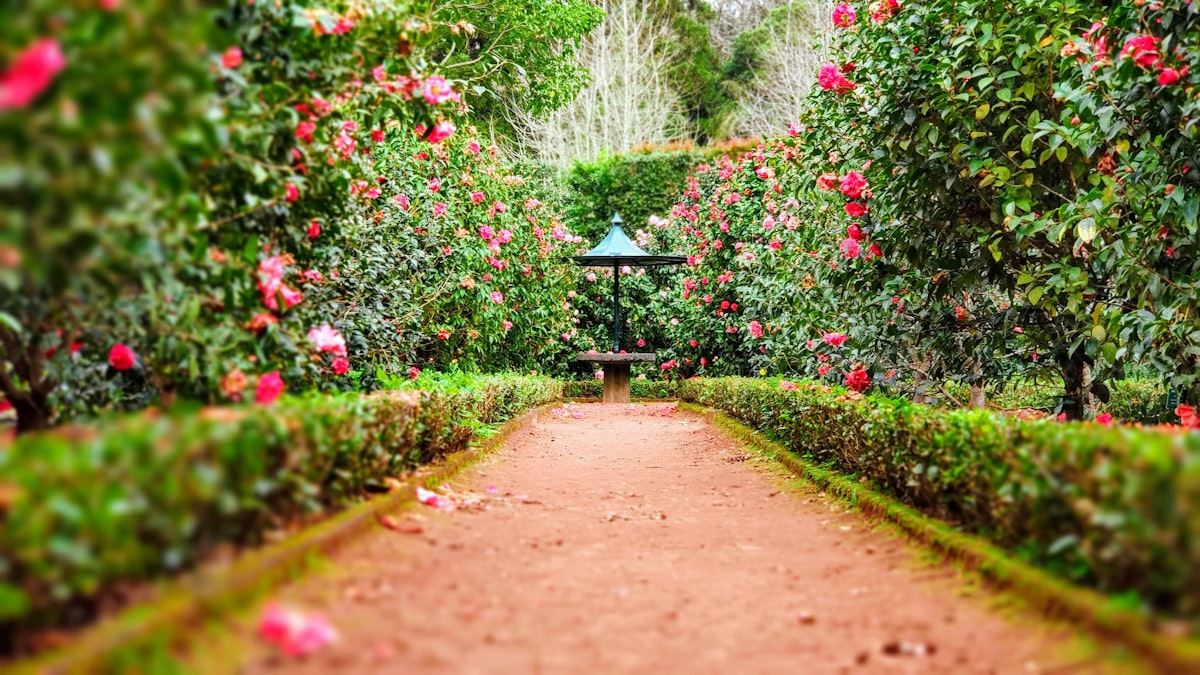
Rethinking urban spaces: rooftops, garages, containers
The city is full of idle space waiting for a purpose: flat unused rooftops, underutilized garages, technical slabs, empty lots between construction sites, discarded shipping containers. Each of these can become a productive unit with an investment far lower than buying rural land — and with logistics already solved by proximity.
The most elegant case is the container farm: 30 m² of usable area, controlled environment, vertical hydroponics, production equivalent to 1 to 2 hectares of traditional soil for greens. CAPEX between R$ 150k and R$ 350k, payback in 18 to 30 months depending on the sales channel. It's not for every founder to start here — but it is where a validated operation tends to evolve.
In parallel, lighter models (supermarket rooftops, building slabs, church garages) enable smart partnerships: the owner provides the space in exchange for supply or revenue sharing, and the founder eliminates the largest fixed cost line item of an initial operation — rent.
Potential risks to the environment and health — and how to mitigate them
Romanticizing helps no one. Urban agriculture has its own risks that need to be addressed from month one — because a sanitary or environmental problem can destroy a neighborhood brand in a week. The four critical points:
- Urban soil contamination — old lots may contain lead, arsenic, and industrial residues. Before cultivating in the ground, run a basic chemical analysis (costs between R$ 200 and R$ 600) or use raised beds with new substrate.
- Water quality — rainwater harvesting requires filtration; urban well water requires periodic analysis. Hydroponics demands strict pH and conductivity control — without this, you can lose a whole batch.
- Use of pesticides — in an urban environment, any spraying affects neighbors. The rational choice is integrated pest management (biological control, physical barriers, crop rotation) — which also works as a marketing argument.
- Operation waste — pruning leftovers, used substrate, packaging. Without a composting plan and reverse logistics, the "sustainable business" turns into an organic waste generator in the neighborhood. Attentive customers notice and demand action.
Most importantly: document everything. Water analysis, seedling origin, sanitary treatment, management plan. This turns into a simple page on your website ("our technical sheet") and protects the brand when — not if, when — a customer asks.
Small businesses, large environmental impact: the aggregate effect
One urban garden alone does not change the food system. One hundred connected urban gardens do.This is the true unlock of the model: each small operation is insignificant in isolation, but combined in a network, it generates measurable environmental and economic impact in the city.
The aggregate effects already emerging in Brazilian cities:
- Average 30% to 60% reduction in carbon footprint per kg of food compared to long supply chains (Embrapa studies on peri-urban projects).
- Income generation in vulnerable communities — urban agriculture absorbs local labor, especially women and youth, with low barriers to entry.
- Use of organic waste — a serious operation collects neighborhood grocery waste for composting, closing the cycle locally.
- Real food education — a customer who knows the producer reduces ultra-processed consumption in 12 to 18 months, according to cooperative reports.
- Urban food resilience — during crises (pandemics, strikes, logistical breakdowns), neighborhoods with their own production maintain access to fresh food while the rest face shortages.
For the founder, these effects are narrative raw material — for impact investors, for innovation awards, for corporate client ESG seals, and mainly for the end consumer who increasingly aligns consumption with value. Those who can measure and communicate this gain a differentiator that big advertising money cannot buy.
12-month roadmap: from seedbed to recurrence
For those starting now, the most common mistake is investing in structure before validating a channel. The reverse works better: validate the channel with minimal production, and only then scale the structure. A practical four-quarter roadmap:
- Q1 – Discovery and channel MVP. Define your persona, choose 1 of the 3 entry paths, set up minimal production (≤ R$ 10k), and sell manually via WhatsApp to 10 to 30 neighbors. Goal: validate willingness to pay.
- Q2 – Digital channel structuring. Create a custom sales application using Lovable with Stripe (without relying on expensive and rigid platforms like Shopify), implement the weekly ordering window, and set up an optimized delivery route 100% independently. Goal: reach 50 recurring orders/month.
- Q3 – Recurrence and B2B. Launch a subscription club, prospect 3 restaurants/businesses for B2B supply, start documenting your narrative (Instagram, blog, technical sheet). Goal: 30% of revenue from recurring sources.
- Q4 – Structural expansion. With a validated channel and recurring cash flow, then you invest in larger hydroponics, a container, or a second unit. Goal: double capacity without doubling unit cost.
This path seems slow — and it is, compared to "launching everything ready." But it is the only one that survives the first sanitary issue, the first week of rain, or the first disappointed customer. Physical-food businesses do not forgive structural haste.

In summary: small, local, digital, and honest
Urban agriculture and online fairs are not a fad — they are the first model, in decades, where operating small is mathematically better than operating large for a significant portion of the urban market. Those who understand this now, methodically and without romanticism, build a business with real margins, measurable impact, and barriers to entry against future competitors.
It's not easy — physical production deals with weather, seasonality, waste, and sanitation. But it is possible, and the market is finally willing to pay for the difference. If you are looking at this window, the next step is less about seeds and more about structuring channels, personas, revenue models, and roadmaps — exactly what the Shinier Accelerator delivers.
Take your urban agtech out of the drawer — with method and ready-to-use tools
Personas, business models, roadmaps, validation with real customers. All guided by AI, at the pace of the founder who wants to start small and grow steadily.
Start nowReferências
- CRIBB, S. L. S. P.; CRIBB, A. Y. Urban agriculture: an alternative to alleviate hunger and for environmental education. XLVII Congress of the Brazilian Society of Rural Economics, Administration and Sociology, Porto Alegre, 2009. Access the article at SOBER (PDF)
- Revista PROLAM/USP Studies on urban agriculture and food security in Latin American metropolitan centers. Access the article in Revista PROLAM/USP
- EMBRAPA Cerrados Technical documents from Embrapa on urban and peri-urban agriculture practices in Brazil. Embrapa Cerrados technical document (PDF)
- TEDx Talks Talks on the social, environmental, and economic impact of urban agriculture in communities. Watch TEDx on urban agriculture
- TEDx Talks Another perspective: how urban gardens transform neighborhoods and generate local income. Watch complementary TEDx