
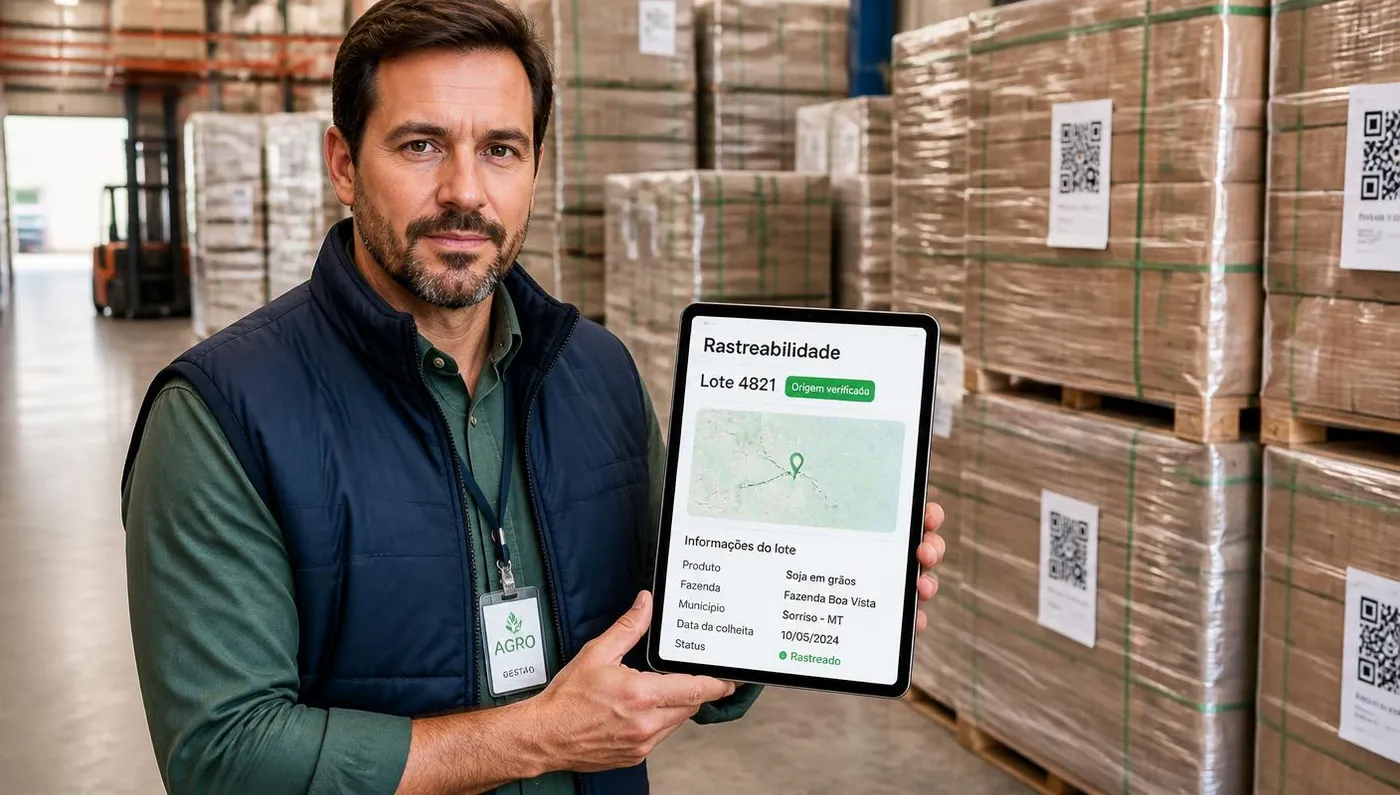
Environmental Traceability with IoT and Blockchain: From Sensor to ESG Report
Proving provenance, physical custody, and ecological impacts for every batch has shifted from an elective differentiator to a mandatory condition of market access. This guide details what primary data must be verified, connecting sensors, documents, production lots, and suppliers, choosing appropriate technology stacks, navigating GS1 and EUDR regulations, and architecting data from field sensors to audit-ready ESG disclosure.
There comes a predictable moment in the lifecycle of any business supplying tier-one enterprises: a multinational customer, a commercial bank, or an overseas buyer demands auditable proof. They do not want generic sustainability marketing; they request the specific digital document connecting that exact production lot to its geographic origin, logistics route, processing conditions, and certified impact footprint. That is when leadership discovers that while environmental aspirations existed, true environmental traceability was missing — and that the difference between the two is precisely what preserves or terminates commercial contracts.
Traceability has deep roots in pharmaceuticals and food safety for self-evident reasons: when bio-sanitary hazards emerge, operators must isolate every affected batch within hours. What fundamentally shifted over the past decade is that identical forensic reconstruction standards now apply to ecological attributes: deforestation-free origins, process water and energy consumption, logistics carbon emissions, packaging recovery, and certified waste disposition.
The encouraging reality is that this is a data engineering problem, not a rhetorical one. Universal standards identify products, lots, facilities, and business events; cost-effective sensors record process telemetry; low-power wide-area networks transport data from field to cloud; and structured frameworks publish disclosures. What is missing is treating traceability as a rigorous software system — with clear data ownership, defined tracking units, and immutable audit trails — rather than an eleventh-hour spreadsheet scramble prior to external audits.
💡 The critical pitfall founders encounter: starting with hyped technologies — almost always blockchain — before establishing the physical tracking unit and the exact claims requiring substantiation. Without defined batch boundaries and verified field capture, immutable ledgers merely immortalize flawed data.
What is environmental traceability and what evidence must be verified?
Environmental traceability is the bidirectional capability to reconstruct an item's lineage: backward to the primary source of inputs, and forward to customer delivery or end-of-life recovery. Global food and feed traceability standards define the non-negotiables of an authentic system: declared objectives, well-defined tracking units, mandatory transition logs, assigned operational custodians, and recurrent testing. Without these five pillars, an organization possesses uncoordinated files, not an operational traceability system.
The operational question anchoring system architecture is unchanging: what specific claim must the enterprise defend, and before which stakeholder? If asserting zero deforestation, critical data consists of parcel polygon coordinates and timestamped harvest dates. If proving product carbon intensity, primary energy consumption per step and certified emission factors matter. If verifying circularity, recovered mass balances and certified recycling certificates are indispensable.
Provenance
Identification of origin producer, agricultural unit, georeferenced coordinates, and extraction or fabrication date. This is the hardest data to recreate retroactively and the first scrutinized during regulatory audits — requiring point-of-origin capture rather than retrospective estimates.
Chain of Custody
Every transfer of physical possession and batch transformation: intake, consolidation, mixing, fractionation, repackaging, and outbound shipping. Without transformation logs, a certified batch dissolves at first blend, obliterating upstream verification.
Condition Telemetry
Continuous thermal monitoring, humidity, process water/energy throughput, cycle durations, and cold chain integrity. Continuous IoT streams that substantiate operational efficiency, quality preservation, and resource intensity per output unit.
Statutory Compliance
Operating permits, certified laboratory assays, fiscal invoices, waste manifests, and due diligence statements. These artifacts typically reside in disparate inboxes — binding them systematically to batch IDs represents half the battle.
Building a startup in environmental traceability, IoT sensing, or supply chain compliance?
This vertical offers one of the clearest enterprise buying triggers today: exporters, global manufacturers, and agricultural cooperatives must substantiate provenance and impacts to maintain market access, yet most still rely on disconnected spreadsheets. Delivering reliable field capture, seamless ERP integration, and audit-ready reporting provides clients with contract preservation, not just software.
The bottleneck is rarely commercial demand: it is advancing from hypothesis to a hardened product that survives rigorous regulatory audits and demonstrates rapid ROI. Shinier accelerates this journey with structured methodologies, engineering frameworks, and dedicated tech-partner execution.
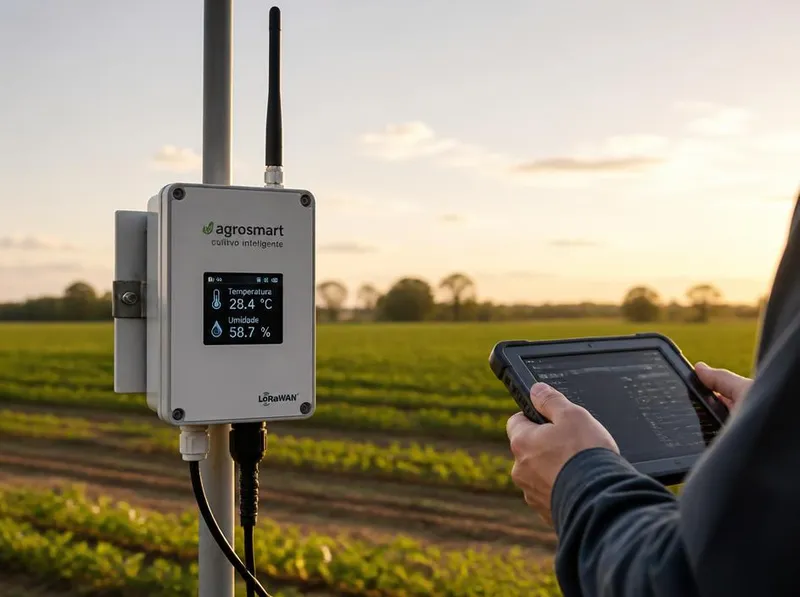
How to connect sensors, documentation, batches, and supplier tiers?
The linchpin harmonizing disparate streams is standardized identification. As long as sensor readings sit in siloed databases, compliance PDFs reside on cloud drives, and production lots live exclusively in ERP tables, traceability cannot exist — only competing parallel truths. The solution requires universal identifiers for trade items, batches, physical locations, assets, and consignments, maintaining consistent IDs across physical tags, sensor payloads, compliance certificates, and core databases.
Superimposed on identity lies the event model. An EPCIS traceability event addresses five fundamental questions: what item, what quantity, where, when, and in what business context — received, transformed, packed, dispatched, decommissioned. This schema reconstructs complete multi-tier journeys effortlessly: auditing inquiries simply query time-ordered event logs for that specific identifier.
The most frequent operational failure occurs at the supplier boundary. Mandating that upstream suppliers adopt an unfamiliar proprietary platform routinely stalls. A superior approach ingests data in formats suppliers already produce — simple mobile forms, automated file uploads, or lightweight webhooks — conducting rigorous schema validation on ingress with strict completeness rules and automatic receiving holds whenever essential proofs are absent.
When to deploy QR Codes, RFID, BLE, LoRaWAN, or Blockchain?
None of these technologies compete directly: each resolves a distinct architectural tier. Item identification, automated bulk reading, environmental telemetry, and multi-party trust are discrete concerns. Conflating them results in bloated capital budgets with little audit defensibility. The decision framework below guides pragmatic selections.
| Technology | Optimal Application | Critical Constraint |
|---|---|---|
| QR Code / 2D Barcodes | Packaging batch identification, consumer-facing disclosures, and rapid operator mobile check-ins | Demands direct optical line-of-sight and individual scanning; soiled or torn labels disrupt data capture |
| RFID (UHF) | Automated bulk scanning without line-of-sight in shipping portals, warehouse inventory, and pallet movements | Higher tag and reader capital costs; RF attenuation near metals and bulk liquids requires rigorous site validation |
| BLE (Bluetooth Low Energy) | Tracking movable assets, internal logistics vehicles, and facility conditions with multi-year battery life | Short transmission range; necessitates dense gateway meshes and battery replacement management at scale |
| LoRaWAN | Long-range, ultra-low-power telemetry in open agricultural fields, river basins, remote substations without cellular | Constrained packet bandwidth; optimized for periodic scalar sensor readings, unsuited for payloads or media |
| NFC | High-security proximity authentication and tap-to-verify interactions for premium items and spot inspections | Centimeter-range proximity; strictly unusable for automated high-volume logistics handling |
| Blockchain / Distributed Ledgers | Immutably logging cryptographic proofs and timestamped commitments between distrusting network participants | Collects zero primary data; needlessly inflates cost and complexity when an authorized enterprise operator suffices |
The operational rule of thumb begins with the most cost-effective tier capable of solving the core business requirement. Many robust environmental traceability systems succeed with standardized identifiers, mobile QR Code scans, and targeted IoT sensors at critical transformation nodes. RFID scales high-throughput logistics; LoRaWAN solves remote connectivity deficits; blockchain addresses institutional distrust between unaligned partners.
How GS1 standards and mandates like the EUDR transform global supply chains?
The GS1 standard enables millions of global enterprises to exchange supply chain telemetry without bilateral format renegotiations. It provides globally unique identifiers for products (GTIN), lots, physical locations (GLN), and shipping containers (SSCC), supported by 2D data carriers and event vocabularies (EPCIS). For enterprise suppliers, standardizing on GS1 is an interoperability prerequisite: the difference between integrating in weeks versus stalling for quarters.
The European Union Deforestation Regulation (EUDR) elevated compliance expectations across international trade. Commodities including soy, cattle, coffee, cocoa, timber, and rubber can only enter European ports with verified due diligence statements, including exact plot polygon geolocations and proof of origin legality. This is an invoice-by-invoice consignment mandate, transforming environmental tracking into a mission-critical shipping clearance system.
The systemic consequence cascades down multi-tier supplier networks. Exporters require georeferenced batch coordinates; they pass this mandate to aggregators, who enforce it on cooperatives, who require it from smallholders. Mid-tier suppliers lacking digital lot tracking face immediate disqualification. Identical compliance pressures govern CSRD sustainability disclosures and GHG Protocol Scope 3 accounting.
Standardized Master Identity
Deploying universal identifiers for products, lots, locations, and shipments prior to purchasing software platforms, allowing shippers, certifiers, and auditors to reference identical records.
Georeferenced Batch Records
Binding GPS boundary polygons and harvest timestamps directly to production lots, satisfying statutory requirements and removing blind spots across extended supply webs.
Documented Due Diligence
Retaining immutable consignment dossiers containing origin certificates, land permits, risk evaluations, and mitigation records with versioned accountability for audit readiness.
How to guarantee data integrity, provenance, and audit defensibility?
Environmental traceability holds commercial value only if telemetry withstands adversarial external scrutiny. Contested data carries unmistakable signatures: retroactively typed manual logs, uncalibrated field instruments, unversioned PDF uploads, unmonitored spreadsheets, and anonymous entries. Before debating distributed ledger consensus, eliminate these foundational vulnerabilities that auditors flag first.
Technical best practice follows proven architectures: record readings at physical sensor origin with authenticated device credentials and atomic UTC timestamps; store telemetry in append-only event stores where corrections manifest as new delta events rather than overwritten records; calculate cryptographic hashes (SHA-256) of evidentiary files upon ingestion; and publish cryptographic roots to public ledgers when multi-party verification is mandated. Operational data remains securely in relational or time-series databases to preserve query speed, economy, and privacy.
- Define the discrete tracking unit before writing code: without lot definitions, all subsequent tracking is approximation.
- Capture readings at physical origin with automated device credentials and UTC timestamps — never batch-typed manually.
- Maintain versioned sensor calibration registries: uncalibrated instrumentation invalidates downstream environmental assertions.
- Employ append-only datastores with immutable audit trails: corrections must exist as linked new events, not silent edits.
- Store cryptographic hashes of certificates and raw evidence outside production databases to expose tampering.
- Perform periodic reconciliations against mass-balance inputs and financial ledgers: discrepancies pinpoint capture leakage.
- Execute quarterly blind recall drills: select a random finished batch and reconstruct its complete multi-tier history within two hours.
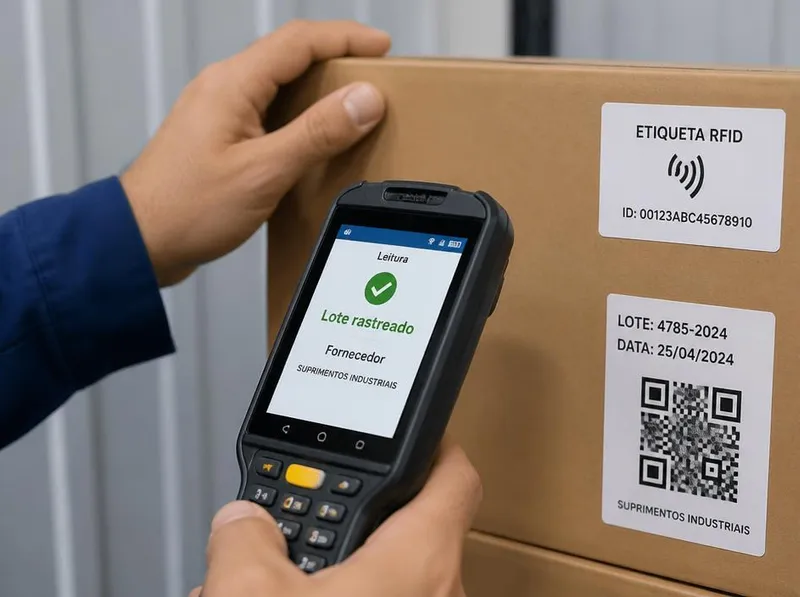
Reference Data Architecture: From Field Sensor to ESG Disclosure
The reference architecture below emphasizes reliability, resilience, and modularity. Environmental traceability demands robust ingest reliability, identity coherence, and rapid query response under audit. Each layer executes a dedicated responsibility, anchored by the foundational rule: no upper analytical layer may synthesize values unsupported by lower-tier telemetry.
| Architectural Layer | Functional Scope | Critical Engineering Precaution |
|---|---|---|
| 1. Field Ingestion & Edge | IoT sensors, handheld scanners, RFID portals, and operator mobile apps generate primary event records | Support offline-first caching and opportunistic syncing; without local buffering, operations revert to paper during network drops |
| 2. Telemetry Transport | LoRaWAN, cellular, Wi-Fi, or BLE gateway networks transport encrypted payloads with authenticated device signatures | Dimension around real-world battery budgets and transmission frequencies rather than optimistic laboratory benchmarks |
| 3. Identity & EPCIS Events | Microservice mapping raw events to GS1 standards, assigning GTIN, lot, GLN, and business event schemas | Strictly enforce universal identification standards from day one; migrating broken ID schemas mid-lifecycle invalidates integrations |
| 4. Auditable Persistence | Append-only event stores with temporal versioning, device signatures, UTC timestamps, and cryptographic asset hashes | Prohibit destructive database updates; mandate append-only immutable logs where modifications link explicitly to previous states |
| 5. Rules Engine & QA | Automated validation for completeness, physical sanity bounds, mass balances, and automated receiving holds | Execute integrity validation at data ingress rather than monthly reporting closes when remediation becomes impossible |
| 6. Impact Accounting | Translating primary telemetry into sustainability indicators: resource intensity, waste ratios, and Scope 3 emissions | Record exact emission factors, calculation methodologies, and source databases to permit complete audit reviews |
| 7. Disclosure & Consumption | Operational dashboards, regulatory compliance APIs, consignment dossiers, and consumer QR Code landing views | Derive public reports from identical operational databases; dual reporting silos represent the inception of inadvertent greenwashing |
Notice that blockchain does not serve as an obligatory universal database. When warranted, it integrates alongside Tier 4, anchoring cryptographic commitments and hashes of milestone records. This equips all stakeholders to verify that historical entries remain unmodified without exposing sensitive trade secrets or compounding hosting overhead.
How to transform environmental traceability into enterprise business value?
Traceability initiatives implemented solely to satisfy defensive regulatory compliance inevitably stagnate at minimum compliance baselines. Thriving programs unlock secondary commercial, operational, and financial yields from existing telemetry. Because initial sensing investments are already capitalized, derivative applications carry high gross margins that readily defend budgetary approval.
Market Preservation
Fulfilling provenance inquiries within hours rather than weeks protects multi-million dollar supply contracts while disqualifying uninstrumented competitors unable to verify claims.
Commodity Pricing Premiums
Empirically verified attributes per batch unlock certified price premiums across specialty coffee, organic cocoa, certified timber, and sustainable fisheries where generic claims falter.
Internal Process Optimization
Telemetry deployed to satisfy compliance simultaneously reveals stage-by-stage shrink, warehouse transit bottlenecks, cold-chain excursions, and material waste — funding projects via internal savings.
Authentic Consumer Loyalty
A scan-ready QR Code revealing auditable provenance, harvest dates, and circular packaging life cycles builds genuine consumer affinity far more effectively than generic advertising campaigns.
Traceability is core data infrastructure, not marketing
The temptation across sustainability disciplines is prioritizing promotional communications. In environmental traceability, shortcuts disintegrate quickly under inspection: either an enterprise can retrieve a random batch and demonstrate verified provenance, custody, and impact in minutes, or it cannot. No corporate brochure bridges that technological gap, and seasoned auditors begin inspections precisely with random sample recalls.
The proven path is disciplined and incremental: articulate the precise claim to substantiate, define the tracking unit, adopt global GS1 standards, instrument only the transformation nodes that influence calculations, archive records in append-only datastores, and only then evaluate distributed ledgers and public interfaces. Executed with this rigor, environmental traceability ceases to be a compliance tax and becomes its true identity: the vital data infrastructure powering market access, pricing power, and enterprise valuation.
Referências
- GS1. Global Traceability Standard. Establishes the universal interoperability standard for supply chain tracking: globally unique identifiers for products, lots, physical locations, and consignments, paired with the EPCIS event vocabulary defining what, when, where, and why transactions occur across trading partners. Consult GS1 Global Traceability Standard
- EUROPEAN COMMISSION. EU Deforestation Regulation. Mandates verifiable due diligence and plot-level geolocation for key agricultural commodities entering European markets, transforming environmental traceability into a direct legal condition of market access. Read Official EUDR Implementation Guidelines
- GRI. Sustainability Reporting Standards. Standardizes how organizations report material impacts across energy, water, biodiversity, and supplier assessments, ensuring comparability for enterprise buyers, rating agencies, and financial institutions. Review GRI Sustainability Standards
- GHG PROTOCOL. Scope 3 Calculation Guidance. Details accounting methodologies for the fifteen categories of value chain greenhouse gas emissions, illustrating how primary supplier batch data replaces crude industry averages to yield audit-defensible carbon inventories. Download Scope 3 Calculation Guidance
- ISO 22005. Traceability in the Feed and Food Chain. Articulates the fundamental principles of design and implementation for traceability systems: declared objectives, tracking unit definitions, data records, responsibilities, and bidirectional recall testing. Explore ISO 22005 Standard