What is a Mockup and What is it For? Complete 2026 Guide
Complete guide on mockups: from the difference between wireframe, mockup, and prototype to AI tools to validate your idea with real clients before investing in development.
The Role of Mockups in Digital Product Design
If you are building a mobile application, web portal, or any digital product, you have certainly heard of a mockup. But what exactly is a mockup, and why is it so critical to the product development process?
In an increasingly competitive tech ecosystem, launching software without visually validating it with target users is one of the most frequent — and expensive — mistakes founders make. A mockup is precisely the asset that mitigates this risk, enabling you to visualize, test, and validate your product before writing a single line of backend code.
Mockups are widely utilized not only in website and mobile app design, but also in physical product packaging, apparel, and hardware engineering. They play a vital role by giving founders, product managers, and developers a realistic preview of the final deliverable.
In this complete, updated guide for 2026, we explore everything from foundational UI concepts to state-of-the-art tools — including generative AI — that are transforming how software interfaces are engineered and validated.
What is a Mockup?
A mockup is a medium-to-high fidelity visual representation of a product. Unlike a preliminary paper sketch, a mockup includes exact color schemes, typography, icon sets, brand imagery, and real spacing between UI elements. It demonstrates what the final product will look like without needing complete backend logic.
Think of a mockup as an architectural scale model of a skyscraper: you can observe the facade, windows, floor spacing, and overall aesthetics — even if you cannot step inside to live yet. Similarly, a mockup displays the complete design interface prior to backend engineering.
A well-crafted mockup answers core product questions: "Where does the primary CTA button sit?", "What is the brand's primary color palette?", "How will users navigate between screens?", and "Does the layout scale cleanly across different screen resolutions?".
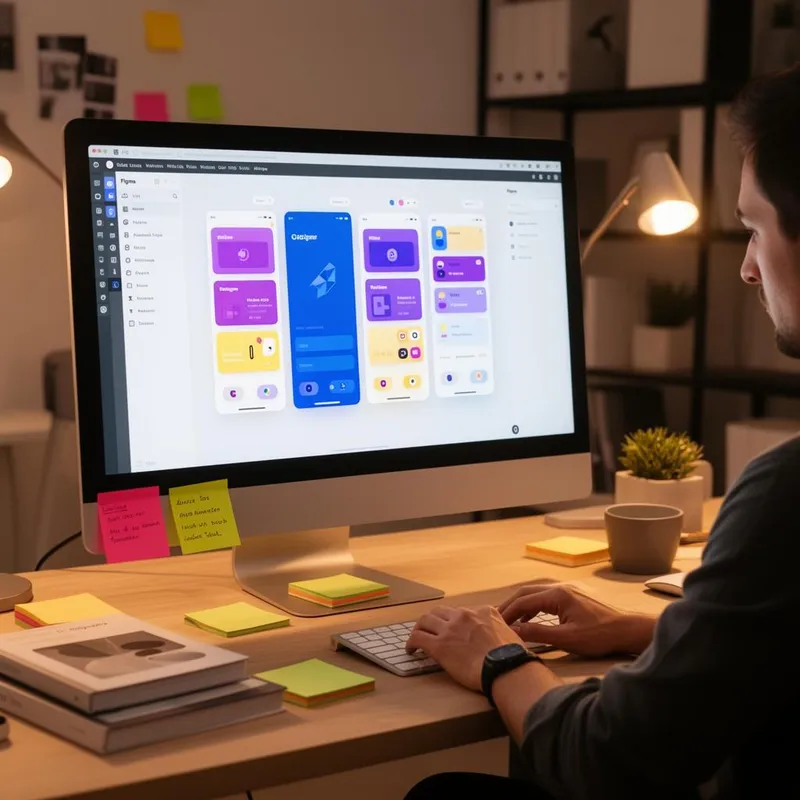
Wireframe vs. Mockup vs. Prototype: Key Differences Explained
These three design deliverables are frequently confused, yet they correspond to distinct phases of the product design cycle. Grasping their differences is essential for anyone leading software development.
Wireframe
Fidelity: Low
Interactivity: None
Objective: Establish the structural blueprint and layout — element positioning, content hierarchy, and navigation flow.
Like a home floor plan: it displays room layouts without interior decoration. Usually built in grayscale without final branding.
Mockup
Fidelity: High
Interactivity: Low / Static
Objective: Showcase the exact visual aesthetic — colors, fonts, icons, imagery, and exact pixel spacing.
Like a fully decorated showroom apartment: you see precisely how it feels, even if the faucets are not yet hooked up to plumbing.
Prototype
Fidelity: High
Interactivity: High
Objective: Simulate the interactive user experience — clicks, screen transitions, menus, and user flows.
Like touring a fully functioning sample home: doors open, light switches work, simulating real usage before permanent construction.
A fourth phase increasingly adopted in high-velocity tech teams is the interactive frontend with mock data. In this stage, the interface is already coded in web standards (HTML, CSS, React/TypeScript), but without real database integration or backend complexity. Local mock JSON feeds data to produce the feel of a live application. This approach is ideal for validating navigation flows with real users, as they interact with code that behaves like a real product.
At Shinier, we leverage this approach during ideation so founders can test real user journeys with prospective customers prior to making heavy investments in backend infrastructure and databases.
Transform Your Product Idea into Clickable Screens
If you have a digital product vision but need guidance building mockups, Marcius, Founder & CEO of Shinier, can help. In a free advisory session, he introduces tools allowing you to build your own mockups — supporting you throughout the journey.
Why Create a Mockup Before Software Engineering?
Building mockups prior to software development is far more than a aesthetic choice — it is a strategic decision that saves thousands of dollars and weeks of engineering rework. Here are the core benefits:
Early Product Visualization
Preview the exact look and feel of your app before committing development capital. Founders and investors can evaluate the product tangibly.
Rapid Stakeholder Feedback
Share mockups with target users, partners, and investors. Gather actionable feedback before coding backend logic.
Drastic Rework Reduction
Adjusting a screen design takes minutes; refactoring production code takes days. Early visual decisions eliminate costly rewrite cycles.
Clear Alignment Across Teams
Designers, engineers, and founders stay on the same page when referencing a unified, approved visual specification.
No-Code UX Validation
Test navigation journeys and information hierarchy before engineering. Catch usability friction early.
Compelling Pitch Deck Material
High-fidelity mockups in investor presentations demonstrate product maturity and operational execution.
In summary, mockups serve as insurance against wasted engineering capital. Every design decision finalized during prototyping is a fix you won't have to resolve — at much higher expense — inside production code.
Popular Mockup Tools in 2026
The software design tooling landscape has expanded tremendously. Today, tools cater to every level — from seasoned UX experts to non-technical founders.
Professional Design Platforms
- FigmaThe industry standard. Real-time collaboration, vast plugin ecosystem, and design systems for clickable prototypes.
- SketchTailored for macOS-centric design teams focused on native Apple HIG vector interfaces.
- Adobe XDDeep integration with Creative Cloud applications (Photoshop & Illustrator) for graphic workflows.
No-Code & Accessible Tools
- CanvaPre-built app and web mockups. Perfect for founders needing speed without a steep learning curve.
- GlideConverts spreadsheet data into functional mobile apps. Great for validating product logic rapidly.
- Marvel AppSimplicity for transforming paper sketches into clickable smartphone flows.
Generative AI Tools
- v0.dev / LovableGenerates production-grade React UI code from natural language prompts in seconds.
- Bolt.newEnables creating and editing entire web apps right in the browser using agentic prompt workflows.
- Claude / ChatGPTEssential for outlining UI copywriting, navigation taxonomy, and UX logical flows.
Validating Your Idea with Clickable Mockups
One of the most powerful applications of a mockup is validating hypotheses with prospective customers. Rather than spending months coding a full system only to discover users dislike the workflow, you can share a clickable mockup and observe real user reactions.
The validation workflow is simple: design core screens in Figma or AI, link screen transitions, and share the prototype link with target users. Prompt them to complete specific goals — "Sign up for an account", "Filter search results", or "Complete checkout" — and notice where they get confused.
This observational research uncovers UX friction points that are impossible to identify by merely looking at static designs. A button that feels obvious to the creator might be completely overlooked by actual users.
In practice, user testing with clickable mockups answers three vital startup questions:
- Do users immediately grasp the value proposition? — If extensive explanation is required, the UI clarity needs improvement.
- Can they complete primary user journeys? — If they get stuck, you've pinpointed a high-priority UX bottleneck.
- Would they pay for this solution? — Pre-orders and strong intent indicate you are on track toward product-market fit.

The Fidelity Journey: From Paper Sketch to Coded Product
Digital product design in 2026 follows a continuous refinement process. Understanding each stage ensures you invest the right effort at the right milestone.
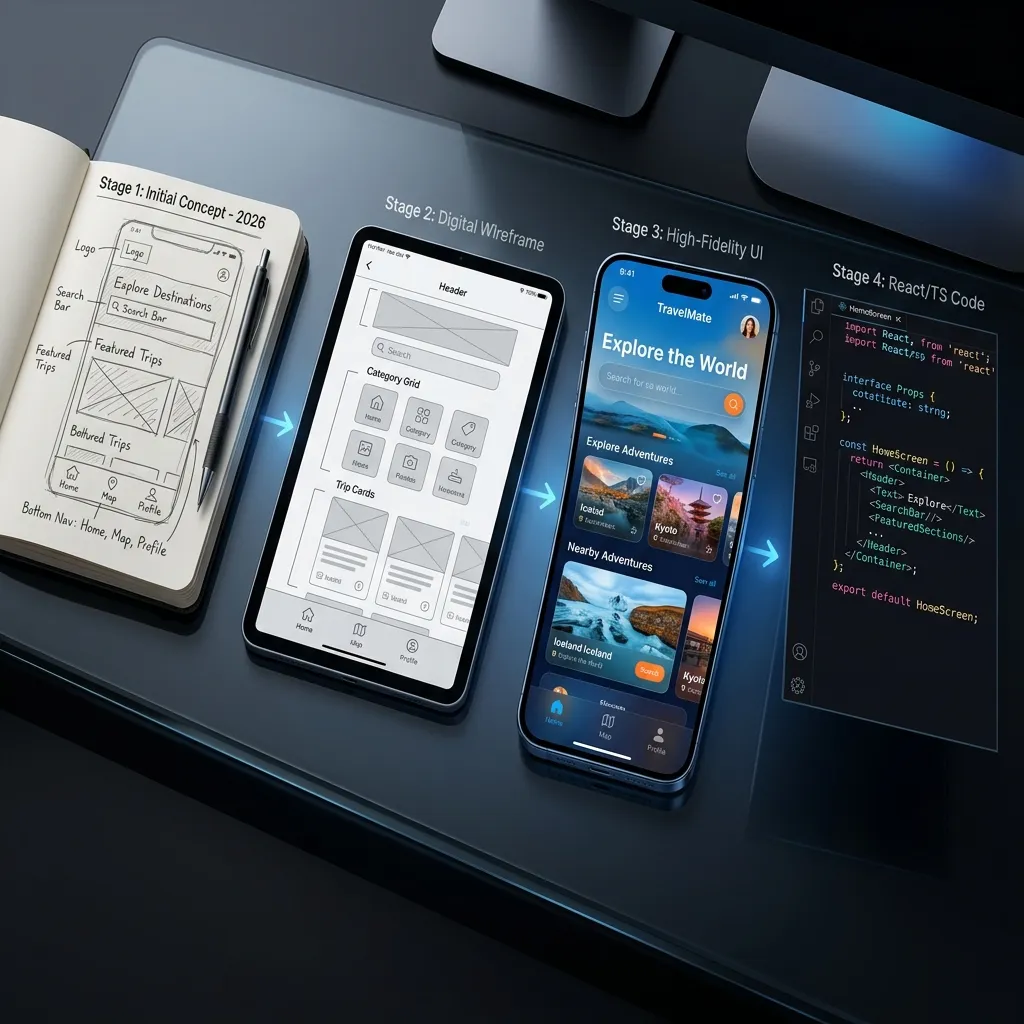
Technical evolution lifecycle: Paper → Wireframe → Mockup → Code (React/TS)
Paper Sketching (Initial Concept)
The fastest, lowest-cost way to explore raw ideas. Focus strictly on macro layout and navigation logic without worrying about aesthetics.
Digital Wireframing (Information Architecture)
Migrating paper concepts to digital tools (Figma/Whimsical). Aesthetics are removed to concentrate 100% on structural hierarchy.
High-Fidelity Mockup (Visual Branding)
Full application of visual identity, modern typography, and design systems. This is the visual asset presented to investors and stakeholders.
Interactive Frontend with Mock Data (Live Validation)
The pinnacle of 2026 validation. Interfaces coded in React/TypeScript allow users to click, scroll, and submit forms before backend systems are built.
AI Generates Mockups, but Expert Designers Make the Difference
Before generative AI tools gained widespread adoption, hiring a UX design specialist to create a clickable Figma mockup typically cost between $500 to $2,000+ depending on scope. That price reflected user research, design system creation, prototyping, and stakeholder iterations.
Today, AI platforms such as v0.dev, Lovable, and Bolt.new empower anyone to generate functional UI layouts in minutes for free. This has democratized early prototyping for non-technical founders on bootstrapped budgets.
However, a significant drawback exists: AI-generated interfaces often look generic. They follow predictable boilerplate styling, reuse familiar layout patterns, and lack unique brand personality. If your competitors rely solely on AI generators, products end up looking identical.
This is where seasoned product designers excel. Designers with deep UX/UI experience understand cognitive load, accessibility standards, visual hierarchy, and emotional branding. They turn a "cookie-cutter" layout into a distinctive, memorable user experience.
The optimal strategy in 2026 is combining AI speed with human craftsmanship: use AI generators to prototype early concepts, then partner with expert designers to refine, personalize, and elevate your product identity.
Specialized Product Designers at Shinier
Shinier matches your startup with product designers and frontend engineers with 8+ years of industry experience. Our team crafts custom interfaces ensuring your software stands apart from standard AI templates.
Apply today: register your startup and launch your ideation phase. Our product design team will help validate and polish your application.
Register and Start IdeationPractical Case Study: From Sketch to Validated Product
Let's examine a real-world example. Imagine Sarah has an idea for a task management app designed specifically for freelance creatives. She doesn't code and operates with a lean budget.
Paper Sketching
Sarah sketches 5 core screens in a notebook: login, main dashboard, task list, project details, and settings. Time: 30 minutes.
Digital Wireframes
Using free Figma templates, she translates paper drawings into digital wireframes to establish navigation structure and hierarchy. Time: 2 hours.
AI Generation + Designer Refinement
Sarah uses Lovable to generate initial React interfaces via prompt descriptions. Then, a Shinier UX designer refines colors, typography, and spacing to build a distinct brand identity. Time: 4 hours.
Clickable Prototype
The high-fidelity mockup is linked into a clickable prototype in Figma. Sarah sends the prototype link to 10 freelancers to test usability. Time: 1 hour.
Validation & Iteration
Based on user feedback ('The new task button should be pinned', 'Add a deadline filter'), Sarah updates the mockup. After 3 feedback cycles, the product design is approved for engineering.
Outcome: Sarah validated her app concept with target users, finalized scope, and secured an approved design — all prior to spending money on software engineering. Total investment was minimal time and free prototyping tools. Contrast this with commissioning a dev team without prior validation, running the risk of spending $10,000+ on a product users don't want.
Best Practices for Building High-Impact Mockups
Regardless of your choice of software tool, adhering to established design principles ensures your mockups look professional and communicate effectively:
Utilize Grid Systems
Consistent element alignment reflects professionalism. Stick to an 8px or 4px layout grid to keep UI components harmonized.
Maintain Visual Consistency
Establish a unified design system with reusable colors, button states, and font styles to speed up revisions.
Use Real Copy
Avoid generic 'Lorem ipsum' placeholders. Real UI copy uncovers layout overflows and truncation issues early.
Design Mobile-First Responsiveness
Create layout mockups for both desktop and mobile screens. Over 70% of web traffic originates on smartphones.
Prioritize Visual Hierarchy
The most important CTA should be visually prominent. Use scale, contrast, and whitespace to guide user focus.
Test with 5 Target Users
Usability research reveals testing with just 5 representative users uncovers 85% of core interface flaws.
When to Use Mockups in the Product Lifecycle?
Mockups aren't just for making things look pretty. They are strategic assets deployed at critical milestones during software development:
- Investor & Client Presentations — Showcase polished product visuals in pitch decks and partner meetings. High-fidelity visual assets build immediate credibility.
- Pre-Development Validation — Test visual hypotheses and usability before assigning engineering sprints. Usability issues fixed in design avoid code refactoring.
- Pre-Launch Marketing & Sales — Feature mockups on landing pages, promo campaigns, and early-bird signups to measure pre-launch demand.
- Engineering Specifications — Provide developers with exact visual documentation: hex colors, spacing, typography scales, and component states.
- Product Redesigns — Before overhauling live software, prototype proposed UX improvements and test them with existing users to prevent churn.
Frequently Asked Questions About Mockups
Do I need design skills to build a mockup?
Not necessarily. Tools like Canva and Glide allow non-designers to build functional mockups easily. AI generators like Lovable and v0.dev create web interfaces from text descriptions. However, for a polished, distinctive commercial product, working with an experienced UX designer is recommended.
What is the best mockup tool in 2026?
It depends on your workflow. For professional designers, Figma remains the undisputed leader. For founders without prior design experience, Canva and Glide offer great templates. For fast coded UI generation, v0.dev, Lovable, and Bolt.new provide cutting-edge prompt workflows.
How long does it take to create a mockup?
A basic wireframe takes ~30 minutes. A high-fidelity mockup suite takes between 4 to 16 hours depending on screen complexity. With generative AI tools, initial interface concepts can be generated in minutes.
Does a mockup replace a prototype?
No. A mockup defines static visual appearance, while a prototype introduces interactive click paths and state transitions. They complement each other throughout the design cycle.
What is an interactive frontend with mock data?
It is a coded user interface (typically React) that functions without a live database or backend API. Data is simulated via local JSON. Users click and navigate through real web components as if using the finished app.
Referências
- NIELSEN NORMAN GROUP. Wireflows: A UX Deliverable for Workflows and Apps. Benchmark article on wireframe flows and differences between design deliverables. nngroup.com
- INTERACTION DESIGN FOUNDATION. Mockups — Topic Overview. Academic reference on the role of mockups in user-centered design process. interaction-design.org
- PRESSMAN, Roger S.; MAXIM, Bruce R. Software Engineering: A Practitioner's Approach. 8th ed. McGraw-Hill Education, 2014. Covers prototyping techniques and mockups in software development life cycles.
- GARRETT, Jesse James. The Elements of User Experience: User-Centered Design for the Web. Berkeley: New Riders, 2011. Key reference on UX design and visual representation before engineering.
- FIGMA. Collaborative interface design platform. Market leader for wireframes, high-fidelity mockups, and interactive prototypes. figma.com
- CANVA. Accessible graphic design platform providing pre-built templates for mockups, pitch decks, and marketing assets. canva.com
Ready to Transform Your Product Idea into Screens?
Apply as a startup with Shinier and begin your ideation journey. Our product design team and CEO Marcius will help you craft professional mockups and validate your software with real customers.
Apply as Startup