
Happiness at Work in Startups: Measuring Well-Being Without Cosmetic Benefits
Ping-pong tables and free beer neither retain talent nor remedy poor management. Learn how to implement eNPS, psychological safety, and the MeuAppoio solution in high-growth startups.
For years, the startup ecosystem popularized the myth that happiness at work in startups depended on colorful offices, video games, fresh fruit baskets, and lounge areas. However, as companies mature and confront scaling challenges, it becomes painfully evident that cosmetic benefits act merely as temporary anesthetics for a dysfunctional organizational culture.
According to global data from the World Health Organization (WHO), over 12 billion working days are lost each year to depression and anxiety disorders, costing the global economy approximately $1 trillion. Simultaneously, reports from Gallup (State of the Global Workplace) reveal that only 23% of employees worldwide feel genuinely engaged in their jobs.
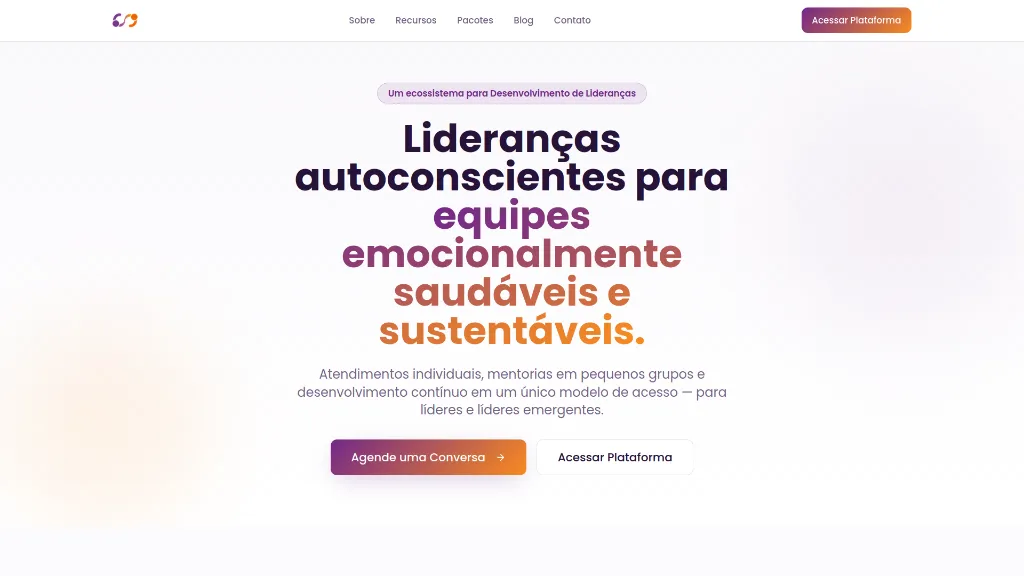
For founders, managers, and People Analytics leaders, fostering a high-performance environment without compromising mental health requires moving beyond improvisation toward evidence-based well-being frameworks. At the nexus of technology and compassionate human care stands MeuAppoio, a Shinier-accelerated platform specializing in emotional health and corporate well-being.
In this guide, we dive deep into the core conceptual pillars of organizational well-being: Martin Seligman's PERMA model, the World Happiness Report benchmarks, and the multidimensional OECD framework to evaluate genuine engagement through actionable metrics such as eNPS, operational autonomy, and psychological safety.
💡 The True Driver of Retention: Employees don't resign because of a lack of happy hours; they leave due to unpredictability, ambiguous role expectations, absence of recognition, and autocratic managers who crush autonomy.
Protect Your Team's Mental Health and Well-Being with MeuAppoio
MeuAppoio is a Shinier-accelerated platform dedicated to providing psychological support, humanized emotional guidance, and sustained well-being for startup teams and leadership. Cultivate psychological safety and prevent burnout with authentic professional support.
What happiness at work means — and what it definitely does not
The word happiness frequently carries romanticized or simplistic connotations in corporate settings. Many organizations enforce a mandate of perpetual optimism — a harmful phenomenon known as toxic positivity. In contrast, organizational psychology approaches well-being through rigorous, pragmatic frameworks.

Authentic workplace happiness flourishes through trust-based relationships, effortless collaboration, and enduring belonging.
What Happiness at Work IS:
- • Sense of Accomplishment: Knowing your individual output drives meaningful company progress.
- • Execution Autonomy: Freedom to decide how to solve problems without micromanagement.
- • Role Clarity: Understanding explicit expectations and performance evaluation criteria.
- • Trust-Based Relationships: Working in teams that elevate each other rather than engaging in toxic rivalry.
- • Sustainable Boundaries: Disconnecting at day's end without guilt, anxiety, or constant dread.
What Happiness at Work IS NOT:
- • Forced Positivity: Suppressing legitimate employee frustrations or operational critique.
- • Cosmetic Perks: Substituting competitive salaries and career progression with free snacks and drinks.
- • Absence of Standards: Tolerating subpar output in the name of artificial team harmony.
- • Endless Hours 'for Love': Conflating passion for the mission with systemic overwork and off-hours availability.
- • Mandatory Socializing: Forcing attendance at after-work dinners and weekend corporate retreats.
What is the difference between satisfaction, engagement, well-being, and purpose?
In daily conversations, satisfaction, engagement, well-being, and purpose are frequently conflated. However, in People Analytics and climate diagnostics, each metric measures a fundamentally distinct dimension of the employee journey:
1. Satisfaction (Passive Contentment)
Satisfaction answers: 'Are my basic working conditions fulfilled?' It assesses hygiene maintenance factors (per Herzberg's two-factor theory) like on-time payroll, medical insurance, hardware equipment, and ergonomic workspaces. An employee can be perfectly satisfied yet completely disengaged and unmotivated to innovate.
2. Engagement (Active Connection to Outcomes)
Engagement reflects proactive energy, enthusiasm, and commitment to organizational milestones. As highlighted by Gallup's State of the Global Workplace, highly engaged teams drive 23% higher profitability and 18% greater productivity. However, engagement sustained via chronic sleep deprivation inevitably leads to collapse.
3. Well-Being (Holistic Health Dimension)
Well-being encompasses holistic physical, psychological, and social health, matching the OECD framework and Martin Seligman's PERMA model: Positive Emotion (P), Engagement (E), Relationships (R), Meaning (M), and Accomplishment (A). Lacking well-being, high engagement swiftly turns into cognitive exhaustion.
4. Purpose (Existential Meaning at Work)
Purpose is the intrinsic link between day-to-day tickets and broader societal or customer impact. In startups, understanding why the venture exists imbues grueling hours with significance, sustaining morale across strategic pivots or runway turbulence.
How to measure eNPS, energy, autonomy, and progress
To govern well-being systematically without guesswork, organizations must deploy quantitative and qualitative pulse surveys bi-weekly or monthly. Below are the foundational indicators to track:
1. eNPS (Employee Net Promoter Score)
Evaluated using the standard prompt: 'On a scale from 0 to 10, how likely are you to recommend our company as a great place to work?'
- • Promoters (scores 9 and 10): Passionate cultural advocates.
- • Passives (scores 7 and 8): Neutral; susceptible to external offers.
- • Detractors (scores 0 to 6): Dissatisfied; high attrition and brand damage risk.
eNPS = % Promoters - % Detractors (Ranges from -100 to +100. World-class targets exceed +50).2. Autonomy and Agency Index
Assessed via direct Likert scale (1 to 5) questions: 'Do I feel empowered to choose the optimal technical approach to fulfill my objectives?' A deficit of autonomy ranks as a primary predictor of professional burnout in WHO health studies.
Squads enjoying high autonomy demonstrate faster resolution velocity and reduced reliance on bureaucratic sign-offs.
3. Energy Level and Workload Strain
Targeted inquiries regarding fatigue: 'How frequently do you wrap up your workday with energy left over for your personal life?' Persistent exhaustion signals an acute need for workload rebalancing or immediate headcount additions.
4. Daily Sense of Progress
As Teresa Amabile's Harvard research proved, making daily headway in meaningful tasks represents the single most potent driver of internal motivation. Tracking blockers resolved weekly is paramount to preserving momentum.
Why cosmetic benefits fail to remedy management failures
Offering superficial perks without addressing workplace architecture is the corporate equivalent of painting a building whose structural foundation is cracking. The World Happiness Report affirms that workplace well-being fundamentally depends on institutional fairness and social safety.
The Fallacy of 'Fun Culture'
Arcade machines and social gatherings do nothing to alleviate anxiety caused by unrealistic product deadlines or arbitrary scope changes dictated without engineer input. In chaotic workflows, forced fun feels condescending.
The Direct Manager's Outsized Impact
Gallup data reveals that 70% of team engagement variance is attributable solely to the immediate manager. Managers who micromanage, withhold constructive feedback, or claim credit for team successes dismantle any corporate wellness initiative.
Fair Compensation and Transparency
Compensation functions as a baseline hygiene factor. As long as teammates perceive compensation below market rates or observe favoritism in promotions, social celebrations yield zero lasting morale benefit.

How work design and psychological safety determine well-being
Defined by Dr. Amy Edmondson (Harvard Business School), psychological safety is the shared conviction that no one will be punished, humiliated, or marginalized for speaking up, asking questions, raising flaws, or proposing bold ideas.
In Google's landmark Project Aristotle study, psychological safety emerged as the single most critical differentiator separating top-performing teams from everyone else.
Workplace & Job Redesign (Job Design)
Optimizing job design requires trimming bureaucratic bottlenecks, eliminating redundant status meetings, and shielding uninterrupted blocks for deep work. Environments demanding continuous real-time connectivity systematically exhaust creative capacity.
Blameless Engineering Culture
In software engineering, production glitches happen. Resilient startups conduct blameless post-mortems, focusing on uncovering systemic flaws that allowed the bug to reach production rather than scapegoating individual engineers.
Professional Support with MeuAppoio
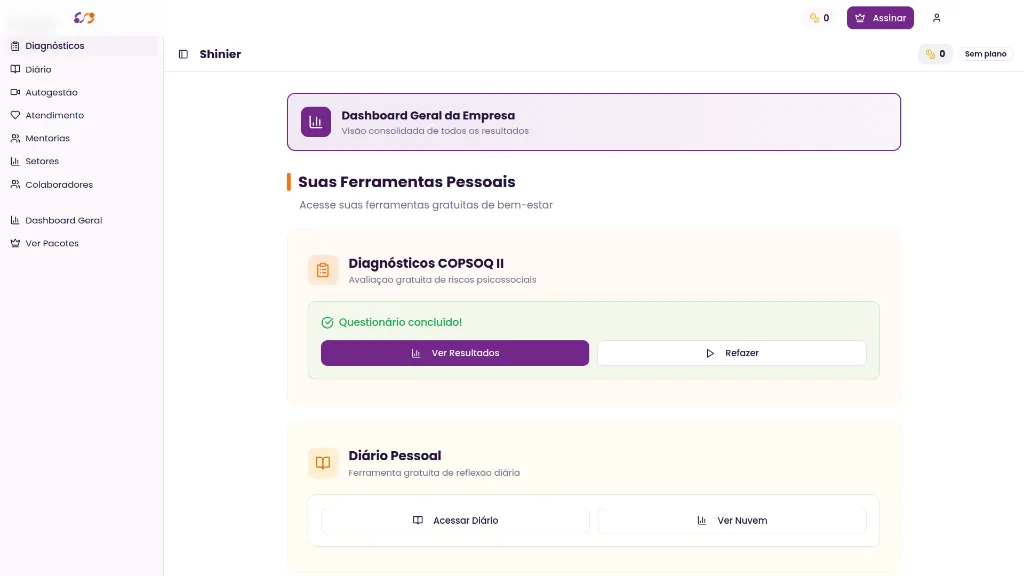
Through MeuAppoio, a Shinier-accelerated platform, your startup equips employees with dedicated 1-on-1 psychological counseling, humanized emotional support, and real-time organizational health metrics.
Discover MeuAppoio corporate plansEthical safeguards required in workplace climate surveys
Gathering sentiment metrics without rigorous ethical boundaries destroys employee trust and invalidates People Analytics data integrity:
1. Guaranteed Anonymity
Rigorously ensure individual responses cannot be reverse-engineered by immediate managers, especially within small squads (fewer than 5 members).
2. Transparent Results Sharing
Share aggregated sentiment metrics (promoters, detractors, and global eNPS) across the entire company, demonstrating maturity and mutual respect.
3. Unwavering Action Commitment
Never deploy a climate survey unless leadership is committed to executing visible action plans addressing the flagged friction points. Surveying without action breeds cynicism.
A practical roadmap to elevate daily team well-being
To translate well-being theory into tangible transformations across your startup, follow this four-phase operational blueprint:
Initial Baseline Diagnostic
Run your inaugural eNPS and psychological safety survey free from judgment. Establish your baseline organizational health score.
Pinpointing Friction Points
Analyze qualitative survey inputs to identify whether key bottlenecks stem from inadequate tooling, meeting fatigue, or management gaps.
Humanized Leadership Coaching
Train founders and engineering leads in non-violent communication, active listening, outcome-driven management (OKRs), and developmental 1-on-1s.
Continuous Health Monitoring with MeuAppoio
Integrate MeuAppoio to provide ongoing professional counseling and comprehensive emotional health monitoring across your teams.
Referências
- WORLD HAPPINESS REPORT. Annual report published by Oxford University's Wellbeing Research Centre in partnership with Gallup and the UN, examining structural social, institutional, and economic drivers of subjective well-being. Access the official World Happiness Report
- GALLUP. State of the Global Workplace. Global empirical research across 160+ countries examining engagement, workplace stress, and the direct impact of managerial leadership on employee retention and enterprise performance. Read Gallup's State of the Global Workplace report
- WHO. Mental Health at Work. World Health Organization guidelines addressing psychosocial hazards in workplace environments, estimating an annual loss of 12 billion workdays due to depression and anxiety. Consult WHO mental health at work guidelines
- OECD. Measuring Well-being and Progress. Multidimensional framework by the OECD Better Life Initiative measuring human progress beyond GDP, incorporating job quality, work-life balance, and economic security. Explore OECD well-being framework
- SELIGMAN, Martin E. P. Flourish: A Visionary New Understanding of Happiness and Well-being. Foundational positive psychology text establishing the PERMA model (Positive Emotion, Engagement, Relationships, Meaning, Accomplishment) as the blueprint for human flourishing. View details of Seligman's Flourish