

Opal WMS: Complete Warehouse Management System Guide for 2026
Discover Opal, our complete WMS solution revolutionizing industrial logistics. Real-time inventory tracking, RFID, SAP, and Salesforce integrations—all in one platform.
Why Does Your Company Need a WMS in 2026?
In today's logistics ecosystem—where fulfillment speed and inventory accuracy define market share—a WMS (Warehouse Management System) is no longer a luxury; it is an operational prerequisite. According to reports from Grand View Research (2025), the global WMS market is projected to reach $7.9 billion by 2028, expanding at a CAGR of 16.3%.
Opal WMS was developed by Shinier for enterprises that require complete control over their warehouses, from inbound receiving to outbound shipping. With native SAP and Salesforce connectors, the system connects logistics directly to sales, finance, and customer service departments.
In this updated guide for 2026, explore all the capabilities of Opal WMS, inspect actual system interface views, understand the underlying capture technologies (RFID, barcodes, Datamatrix), and learn how market leaders like Sonda Ativas achieve concrete operational gains.
Dashboard: 360° Visibility Over Your Warehouse
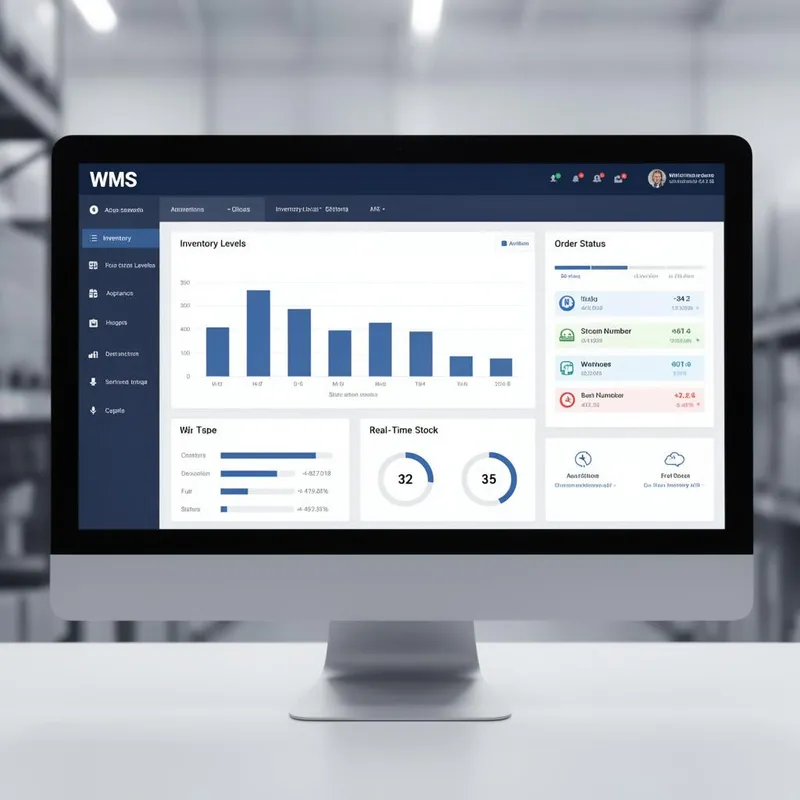
The primary interface of Opal WMS provides a complete, real-time 360° command view of all warehouse activities. On a single screen, logistics managers monitor:
- Inventory Levels — Bar graphs detailing stock by SKU category, featuring automated alerts when items reach reorder thresholds
- Order Statuses — Live tracking of every customer order: pending, picking in progress, packed, dispatched
- Operational KPIs — Inventory accuracy percentages, average picking cycle times, and orders fulfilled per hour
- Smart Alerts — Automated notifications triggering on stockouts, shipping delays, or operational bottlenecks
The dashboard was crafted following logistics UX best practices, placing priority metrics front and center. All widgets update in real time via WebSockets without requiring manual page reloads.

Data Capture Technologies: RFID, Barcode, and Datamatrix
The core strength of Opal WMS resides in its automatic data capture engine. The system seamlessly supports three complementary technologies:
RFID (Radio-Frequency Identification)
Simultaneous multi-item reading without line-of-sight requirements. Ideal for high-density inventory counts—Opal WMS processes up to 500 tags per second, slashing audit times from days to hours. Passive RFID tags start at $0.06 per unit.
Barcodes (1D/2D)
Proven, cost-effective technology. Opal WMS reads barcodes via smartphone cameras or industrial handheld scanners. Ideal for mid-volume operations with controlled budgets.
Datamatrix (2D)
High-density 2D matrix code storing up to 2,335 alphanumeric characters within a tiny 2mm² print footprint. Crucial for serialization and regulatory compliance in pharmaceutical and food sectors.
A standout advantage of Opal WMS is interoperability: the platform allows any combination of these technologies within the same warehouse, enabling a step-by-step transition from traditional barcodes to RFID without operational downtime.
Inventory Map: Precise Location for Every SKU
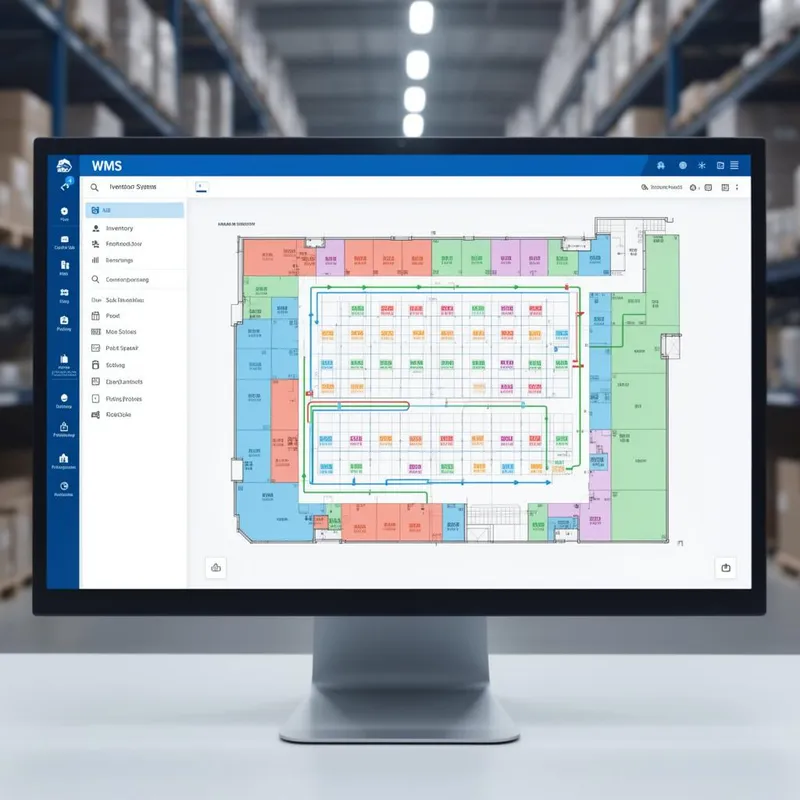
One of the most powerful features of Opal WMS is its interactive visual warehouse map. The screen renders a floorplan layout divided into color-coded zones:
- Receiving Zones (blue) — Staging areas for inspecting, tagging, and slotting incoming shipments
- Storage Zones (green) — Rack positions displaying real-time occupancy percentages
- Picking Zones (orange) — Order fulfillment areas mapped with optimized picker paths
- Shipping Zones (red) — Packing and staging bays integrated with carrier manifest systems
The smart slotting algorithm in Opal WMS automatically places high-velocity fast-movers in easily accessible rack positions, reducing picking travel times by up to 35%. The system also calculates optimal picking routes based on Travelling Salesperson Problem (TSP) algorithms, minimizing operator footwork.
Every stock movement is recorded automatically, establishing a complete digital audit trail essential for recall readiness and regulatory compliance.
Measurable Impact: WMS Results by the Numbers
Implementing Opal WMS generates clear financial returns within weeks of deployment. Consolidated data across client operations demonstrates:
25-40%
Reduction in inventory errors
20-30%
Increase in picking productivity
15-25%
Reduction in warehouse costs
99.5%+
Inventory accuracy rate
1. Total Operational Control
With Opal WMS, leadership gains 100% real-time visibility across all inventory. Every item is tracked from inbound receiving to outbound carrier handoff, eliminating phantom stock and preventing stockouts or overstocking. Automated alerts trigger when SKUs breach reorder points.
2. Space & Slotting Optimization
Opal's slotting engine analyzes historical movement trends to recommend ideal rack placements. High-turnover items sit in the "golden zone," while slow movers occupy upper or peripheral shelves. This strategy reclaims up to 40% of effective warehouse floor space.
3. Workforce Upskilling
WMS automation doesn't eliminate jobs—it elevates workforce roles. Repetitive manual counting and visual checks are replaced by automated scans, freeing staff to focus on analytical tasks like demand planning, layout tuning, and quality assurance.
Native Integration with SAP and Salesforce
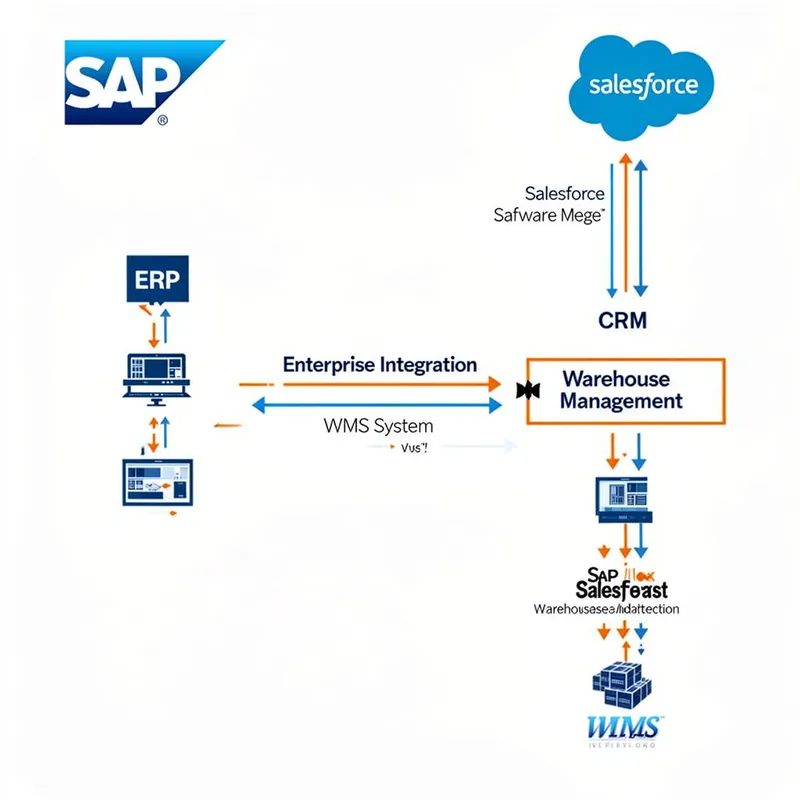
A standalone WMS solves only half the equation. True operational transformation occurs when the warehouse synchronizes in real time with enterprise systems. Opal WMS provides native bidirectional connectors for market-leading enterprise suites:
| System | Synchronized Data | Primary Benefit |
|---|---|---|
| SAP (ERP) | Invoices, purchase orders, financial movements, stock valuation | Physical product flows immediately reflect in financial accounting ledger |
| Salesforce (CRM) | Real-time stock availability, shipment tracking, customer order history | Sales representatives query real-time stock to make binding delivery promises |
Integrations operate via REST APIs and webhooks with sub-2-second sync latency. When an operator receives goods in the warehouse, updates immediately post into SAP and Salesforce.
For clients utilizing alternative ERPs (TOTVS, Oracle, Microsoft Dynamics), Opal WMS includes a configurable middleware middleware layer enabling rapid setup without custom coding.
Mobile App: Operations in the Palm of Your Hand
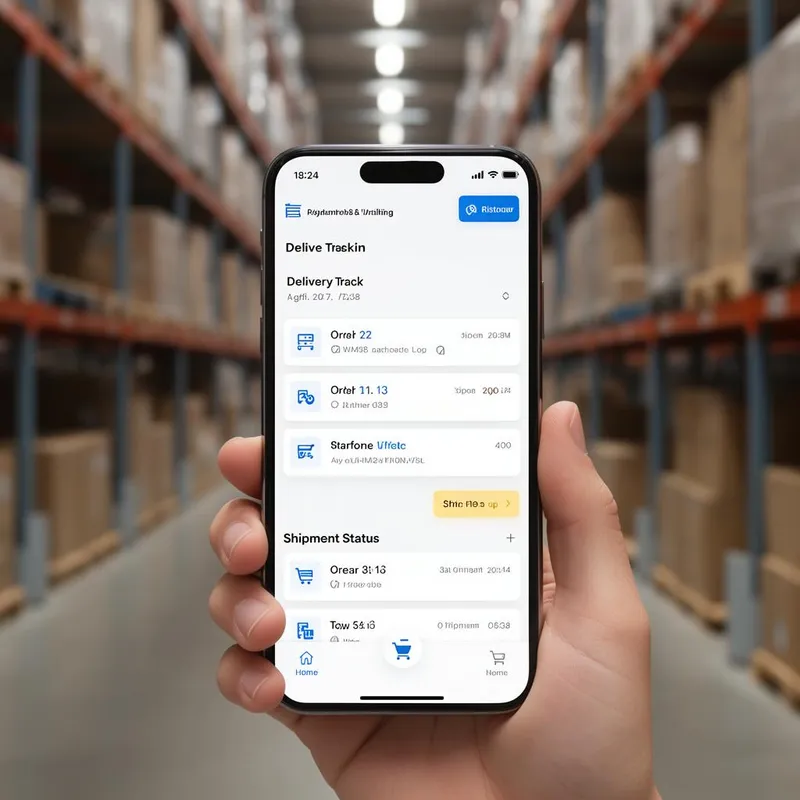
Opal WMS Mobile puts full warehouse management on tablets and smartphones (iOS and Android). Operators and supervisors execute:
- Mobile Receiving — Dockside invoice checking with camera-based barcode scanning
- Guided Picking — Step-by-step pick paths displayed on-screen with visual item confirmation
- Cycle Counting — Scheduled partial counts conducted without stopping active fulfillment
- Delivery Tracking — Real-time carrier dispatch monitoring and proof of delivery
The mobile app features an offline-first architecture, storing transactions locally and auto-syncing upon reconnecting to Wi-Fi—vital for sprawling warehouses with patchy coverage.
Forklift operators utilize rugged IP67 industrial tablets, while managers monitor KPIs on personal smartphones with biometric authentication and role-based permissions.
Advanced Features of Opal WMS
Consignment & Reverse Logistics
Opal WMS automates complex consignment inventory and returns management. When customers return merchandise, the system auto-updates inventory ledgers, issues credit notes in SAP, and routes items to inspection bays in under 2 minutes.
Drop Shipping & Multi-Location Routing
For multi-warehouse operations, Opal WMS identifies the nearest fulfillment center with stock availability. It evaluates shipping costs, transit times, and margins to route orders from optimal dispatch points.
Cross-Docking
The cross-docking module routes inbound goods directly to outbound staging bays without entering putaway storage. Ideal for fast-moving goods, cutting warehouse stay times by up to 60%.
BI Analytics & Custom Reporting
Opal's BI module includes over 40 pre-built operational reports: ABC inventory curves, turnover rates, operator picking rates, storage cost per m², and fulfillment lead times. Data exports seamlessly to Power BI and Tableau.
Batch & Expiration Tracking (FEFO)
For pharma, food, and chemical industries, Opal WMS enforces FEFO (First Expired, First Out) rules. Automated tracking guarantees near-expiry batches are picked first, with early alerts for approaching expiration dates.
Wave & Batch Picking Strategies
Opal supports discrete picking, batch picking (consolidating items across multiple orders), wave picking (scheduled release windows), and zone picking. The engine dynamically chooses optimal methods based on order density.
Client Case Study: Sonda Ativas
Sonda Ativas, one of Latin America's largest managed IT service providers, faced severe operational challenges managing over 50,000 IT assets across multiple facilities.
Challenges Before Opal WMS:
- •Manual audits requiring 3 full days per warehouse
- •Inventory accuracy rate hovering below 85%
- •Equipment loss due to missing chain-of-custody tracking
- •Lack of synchronization between physical inventory and financial systems
Results Achieved with Opal WMS:
99.2%
Inventory Accuracy
4 Hours
Audit Time (was 3 days)
Zero
Asset Loss
"Opal WMS completely transformed our warehousing operations. What used to take an entire team 3 days is now accomplished by 2 operators in 4 hours with near-perfect accuracy."— Logistics Manager, Sonda Ativas
Frequently Asked Questions About WMS
What is a WMS (Warehouse Management System)?
A WMS is software that automates and optimizes internal warehouse operations from receiving to dispatch. It tracks inventory in real time, optimizes pick paths, manages slotting, and connects with ERPs. Opal WMS utilizes RFID, barcodes, and Datamatrix for automated data capture.
What data capture technologies does Opal WMS support?
Opal WMS supports RFID for scanning hundreds of tags per second, 1D/2D barcodes via mobile camera or industrial scanners, and Datamatrix for high-density regulatory tracking. It also features native mobile apps and SAP/Salesforce API integrations.
What ROI can we expect from implementing Opal WMS?
Clients report 25-40% reductions in inventory errors, 20-30% increases in picking productivity, and 15-25% operational cost savings. Average payback occurs within 8 to 14 months based on volume.
Does Opal WMS integrate with SAP and Salesforce?
Yes. Opal WMS includes native bidirectional connectors with SAP for financial and inventory ledgers, and Salesforce for real-time CRM stock queries. Sync latency is under 2 seconds.
How long does implementation take?
Implementation ranges from 6 to 16 weeks depending on warehouse size, SKU complexity, and integration requirements. Phases include workflow mapping, system configuration, ERP integration, training, and assisted go-live.
Does the mobile application function offline?
Yes. Opal WMS Mobile operates offline, recording transactions locally and auto-syncing upon reconnecting to Wi-Fi—crucial for large facilities with spotty connectivity.
Referências
- BALLOU, Ronald H. Business Logistics/Supply Chain Management. 5th ed. Pearson, 2006. Benchmark text on logistics management and WMS. Amazon
- BOWERSOX, Donald J.; CLOSS, David J.; COOPER, M. Bixby. Supply Chain Logistics Management. 4th ed. McGraw-Hill, 2014. Covers integration of WMS platforms with ERPs and CRMs. Amazon
- GS1 GLOBAL. Identification and Data Capture Standards: RFID, Barcode, and Datamatrix. 2024. Official guidelines on traceability technologies. GS1
- SAP. SAP Extended Warehouse Management (EWM). Official documentation on enterprise WMS integration. 2025. SAP
- COUNCIL OF SUPPLY CHAIN MANAGEMENT PROFESSIONALS (CSCMP). State of Logistics Report 2025. Annual industry report on warehousing and supply chain trends. CSCMP
Transform Your Enterprise Logistics Today
Schedule a free live demo of Opal WMS and discover how to optimize warehouse management with cutting-edge RFID, real-time tracking, and native SAP/Salesforce integrations.
Request a Free Demo