
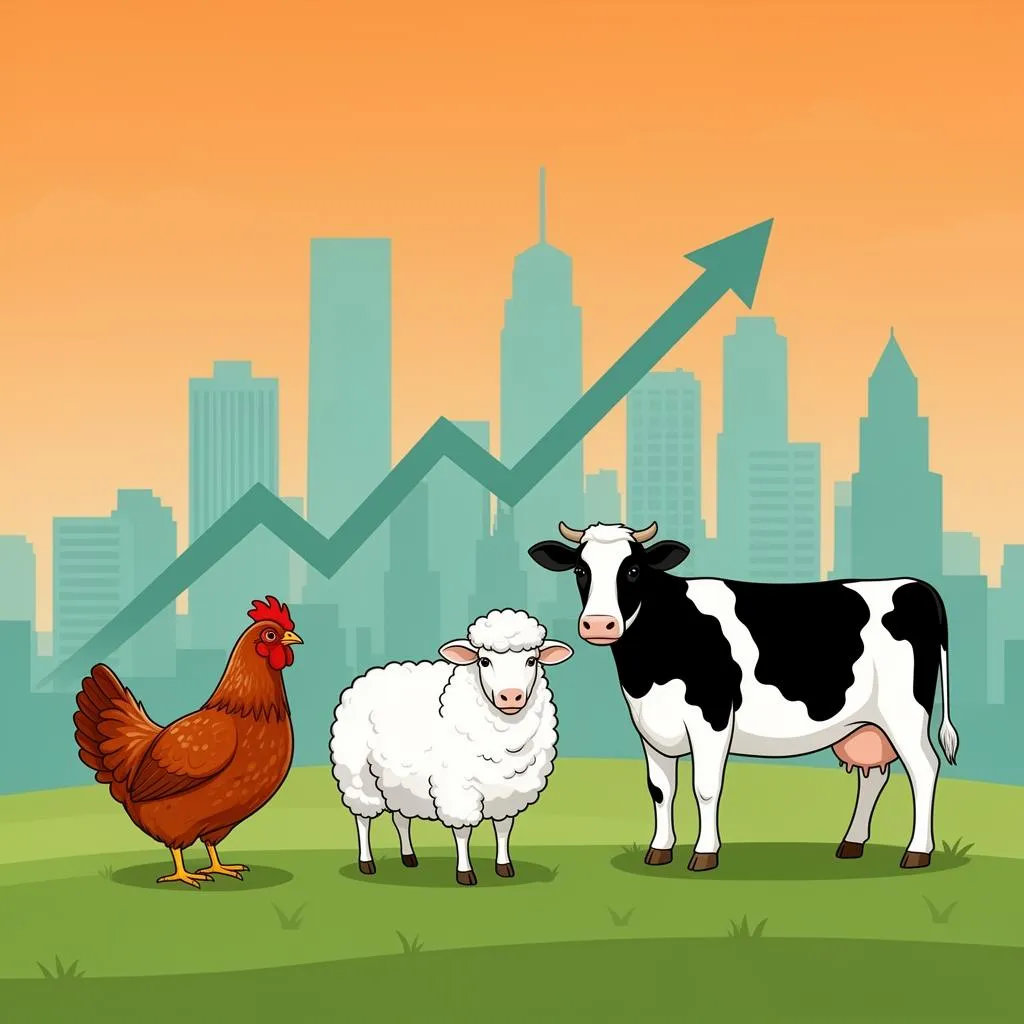
Bootstrap for Startups in 2026: Are You a Chicken, Sheep, or Cow?
Marcius's farm fable demonstrates why not every startup needs to become a unicorn to succeed. Discover financial archetypes, stage-by-stage real investment costs, and why financial sustainability is now mandatory.
Camel Startup vs Unicorn Startup: The Real vs The Mythical
In the mind of aspiring tech founders, becoming a unicorn — a startup valued at over $1 billion prior to an IPO — became the ultimate symbol of success. The term was coined in 2013 by investor Aileen Lee precisely because unicorns are mythical: beautiful to imagine, exceedingly rare to encounter, and non-existent in daily reality. Today, with over 1,200 unicorns globally, the rarity has faded, but the path to get there still demands consecutive rounds of aggressive dilution, hyper-growth spending, and often years of consecutive net losses.
In direct contrast to this mythical beast, 2026 has firmly solidified the thesis of the camel startup. The camel is a real animal, incredibly hardy and resilient — capable of trekking through scorching deserts with minimal water while carrying heavy cargo for weeks. It was the backbone of international trade caravans along the Silk Road, connecting East and West centuries before venture capital existed. Unsurprisingly, top funds like Sequoia, a16z, and Bessemer have adopted "camel companies" to describe the businesses they actively want in their portfolios: companies that grow with genuine revenue from day one, operate lean, avoid vanity mega-rounds, and endure long market winters without relying on investor subsidy.
In 2026, with disciplined interest rates, selective capital markets, and memories of post-2022 tech layoffs, the camel startup has become the aspirational model for serious founders. Between the mythical unicorn and the resilient camel lies an entire spectrum of business models. To help founders navigate this spectrum and make financial choices aligned with their operational reality, Marcius created the Farm Fable.
Brazilian Unicorns in 2026
25 tech startups born in Brazil have crossed the $1 billion valuation mark. Notice how fintechs and core infrastructure platforms dominate the list.
Source: Distrito — Unicorn Race 2026 & Tracxn (Apr/2026). Logos via Clearbit.
Every Financial Stage Has a Dedicated Shinier Tool
Before burning runway, validate with method. Before pitching investors, solidify your numbers. Leverage Shinier's AI-guided tools to make financial decisions backed by hard data rather than guesswork.
Pricing Engine
Set fair, profitable pricing for your product by factoring in payroll, cash reserve requirements, and growth margins across 6 distinct industries.
Access Free ToolBudget Planner
Organize your initial budget with AI assistance, controlling upfront setup investments, monthly operational expenses, and financial projections.
Explore ToolCash Flow Manager
Log income and expenses through conversational AI. Attach receipts (photos/PDFs) for instant OCR processing. Filter by month, quarter, or year and export audit-ready P&L statements.
Explore ToolThe Farm Fable: Chicken, Sheep, or Cow?
The framework Marcius uses during founder mentoring to identify, within 30 seconds, the financial DNA of a startup — and determine which capital strategy actually makes sense.
Chicken Startup — Cheap, Agile & Versatile
Pure Bootstrap. Fully manageable with internal cash.
A chicken is inexpensive to purchase. You can sell the eggs (recurring customer revenue), hatch eggs (launch derivative add-on products), expand horizontally by buying more chickens (replicate the model to new client segments), harvest the chicken (pivot while consuming operational assets), or sell the live chicken (fast, modest exit).
Practical Translation: Vertical SaaS, infoproducts, boutique agencies, micro-SaaS, and recurring B2B services with low Customer Acquisition Cost (CAC). Business models where customer payments fund operations right out of the gate. Pure bootstrapping works seamlessly. Grant funding is a welcome boost, but not mandatory.
Sheep Startup — Specialist with Premium Offerings
Partial Bootstrap. Benefits from grants & non-dilutive leverage.
Sheep require higher upfront investment. But they produce high-grade wool — a premium product yielding superior margins. You can process wool into finished goods, scale vertically by refining quality, or target high-end clientele willing to pay top dollar. Horizontal expansion (managing large flocks) requires resources, creating a high barrier to entry that deters cheap competition.
Practical Translation: Deeptech, proprietary software with IP patents, applied AI platforms, martech with proprietary algorithms, regulated healthtechs. Bootstrap through the MVP, then leverage non-dilutive innovation grants (Centelha, PIPE FAPESP), strategic loans, or targeted angel capital. Rarely requires heavy venture capital dilution.
Cow Startup — Capital Intensive, Exit-Driven
Bootstrap Non-Viable. Requires VC, corporate venture & multi-round exit strategy.
A cow grows large, requires massive feeding, and is ultimately raised for harvest or milk production. Scaling horizontally (managing herds) demands vast capital — pastures, fencing, feed, veterinary care. Extracting milk at scale requires heavy industrial infrastructure (milking parlors, refrigeration, logistics). No one builds large cattle operations as a hobby: they exist to supply meatpacking plants, retail chains, or industrial conglomerates.
Practical Translation: Two-sided marketplaces, full-stack neobanks, urban mobility apps, on-demand food delivery networks, cloud infrastructure. Bootstrapping is impossible. The path requires institutional venture capital, corporate venture arms, and a planned M&A or IPO exit — eventually becoming absorbed by an industry giant.
The Core Question
Stage-by-Stage Investment Costs in 2026
Average benchmarks calculated across startups accelerated by Shinier. Use these figures as realistic reference points for financial planning.
Stage 1
MVP
Product Launch · First 6 Months
Sufficient capital to deploy a functional initial version into production and collect early customer revenue or usage signals. Goal: validate customer pain, willingness to pay, and secure first 10 paying accounts.
Recommended sources: Founders' equity, FFF (family, friends & fools), customer pre-sales.
Stage 2
Beta
Automation & Integrations · Next 9 Months
Eliminate manual operational bottlenecks, integrate with external software stacks (CRMs, ERPs, payment gateways), implement retention analytics, and drive operational efficiency.
Recommended sources: MVP operating revenue + non-dilutive innovation grants (Centelha, regional FAPs).
Stage 3
V1
R&D & Competitive Moat · Next 12 Months
Building a defensible moat: advanced R&D, proprietary algorithm development, certifications, and intellectual property. This is where the product matures into a high-barrier tech venture.
Recommended sources: PIPE FAPESP Phase 1 & Phase 2 grants, CNPq, Finep, or matching institutional co-investment.
The Smart Move: Non-Dilutive Innovation Grants Before Any Equity Round
To reach Stage V1 without prematurely selling cap table equity, our recommended strategy is crystal clear: leverage government innovation grants and non-dilutive programs. Initiatives such as Centelha, PIPE FAPESP (Phase 1 & Phase 2), CNPq, Finep, and regional innovation agencies offer non-reimbursable capital. You return technological progress and economic value — not cash or equity.
The proven progression observed across Shinier accelerator startups: Centelha Grant to validate proof-of-concept → PIPE Phase 1 to develop core technology → PIPE Phase 2 where internal matching capital solidifies technology, strategy, and sales engine. Upon completing PIPE Phase 2, the startup officially reaches Stage V1 status: possessing a sustainable product, defensible IP, and tuned operational economics.
From this point forward — and only from this point forward — should you select your long-term funding path based on your archetype:
- Chicken: Reinvest operating profits to fund organic expansion (pure bootstrapping).
- Sheep: Utilize innovation credit lines (FINEP Credit, BNDES), technology-backed loans, or surgical angel rounds.
- Cow: Execute an institutional Venture Capital path, partner with Corporate Venture units, and structure multi-round exit roadmaps (Series A, B, M&A, or IPO).
Why We Updated This Article in 2026: The End of the Cash Burn Era
This guide was originally published in April 2021, during the peak of post-pandemic venture euphoria. In 2021, Latin America witnessed record funding, with over $9.7 billion invested across 1,000+ startup deals in Brazil alone. It was the era of "growth at all costs" — burning cash to buy market share under the assumption that the next mega-round would always arrive at a higher valuation.
In 2026, that era is definitively over.
A combination of elevated interest rates, global macro discipline, subdued M&A markets, and public market write-downs of unprofitable tech companies permanently recalibrated expectations. Investors and grant committees no longer tolerate startups operating on perpetual cash burn. By 2024–2025, annual venture volume in Brazil normalized around $2 billion across ~380 deals — a dramatic adjustment from 2021 peak levels. Throughout 2024, only one new Brazilian tech startup attained unicorn valuation: QI Tech.
The market consensus is now unified across all capital sources:
- Venture Capital Funds demand healthy gross margins, CAC payback under 18 months, and a clear path to positive EBITDA prior to follow-on rounds.
- Public Grant Programs (Centelha, PIPE, Finep) prioritize teams with prudent financial planning, verified commercial viability, and real founder commitment.
- Banking & Credit Institutions only extend growth debt backed by verified recurring revenue.
- Corporate Venture Buyers invest exclusively in startups operating near profitability or easily integrated without diluting corporate margins.
In 2026, financial sustainability ceased to be a optional preference and became a mandatory entry ticket. This explains why the camel startup thesis — resilient like the merchant caravans that navigated the Silk Road —, the chicken analogy, and smart grant-assisted bootstrapping have become the dominant standard. This is the exact methodology we mandate across all Shinier accelerator programs.
Smart Bootstrapping: 6 Core Principles Every Founder Should Practice
Regardless of whether your startup is a chicken, sheep, or cow over the long term, every founder should start as a bootstrapper. Early equity capital is always the most expensive capital you will ever raise.
Revenue Before Features
Launch unpolished, launch manual, launch imperfect — but launch with customer billing. Every feature built prior to securing your first paying customer is an unverified gamble.
Pre-Sales as Self-Funding
Offer annual pre-sales, discounted multi-year contracts, or paid beta tiers. Customers who pay upfront fund your MVP without cap table dilution or debt liability.
Innovation Grants as Invisible Accelerators
Centelha, PIPE FAPESP, CNPq, Finep, Sebraetec, and regional grant funds exist specifically for R&D. Non-dilutive capital is out there — ignoring it forces premature equity dilution.
Aggressive Margin Reinvestment
Reinvest all net proceeds back into product, customer acquisition, and operations. Inflated early founder salaries destroy runway. In bootstrapping, founders collect late — but collect significantly more.
Burn Rate is the Enemy, Runway is Your Ally
Track runway on a weekly basis. If cash runway drops below 9 months, trigger immediate cost control measures. Reducing burn is strategic discipline, not failure.
Raise Capital Only for Acceleration
Never raise equity capital to survive — raise equity capital to accelerate what already works. If your startup requires outside funding just to keep the lights on, capital isn't the problem: your business model is.
Ready to Determine If Your Startup is a Chicken, Sheep, or Cow?
Utilize Shinier's financial software suite to model cash flow scenarios, price with quantitative methodology, and map your MVP → Beta → V1 roadmap with planned grant filings.
References — Essential Startup Finance Reading
- Mullins, John W. & Komisar, Randy. Getting to Plan B: Breaking Through to a Better Business Model. Harvard Business Review Press, 2009 — Classic reference on executing business pivots with financial discipline.
- Feld, Brad & Mendelson, Jason. Venture Deals: Be Smarter Than Your Lawyer and Venture Capitalist. Wiley, 2019 (4th ed.) — The definitive handbook on funding structures, term sheets, and the true cost of risk capital.
- Damodaran, Aswath. The Dark Side of Valuation: Valuing Young, Distressed, and Complex Businesses. Pearson FT Press, 2018 (3rd ed.) — Mandatory reading for valuing early-stage tech ventures with developing unit economics.
- Berkus, Dave. Berkonomics: Business Insights from One of America's Most Successful Angel Investors. The Berkus Press, 2013 — Practical angel investor insights on knowing when to raise capital and when NOT to raise capital.
- Warrillow, John. Built to Sell: Creating a Business That Can Thrive Without You. Portfolio, 2012 — Financial framework for constructing acquirable, scalable enterprises.
- Maurya, Ash. Running Lean: Iterate from Plan A to a Plan That Works. O'Reilly Media, 2022 (3rd ed.) — Theoretical foundation for disciplined bootstrapping and continuous financial validation.
- Junior, Marcius Leandro. Methodology for Evaluating the Financial Viability of Startups — Monograph completing the MBA in Digital Business Management & Artificial Intelligence at USP/ESALQ. Academic research serving as the core methodology for valuation models, cash flow management, and stage-by-stage planning applied at Shinier. Academic profile available on the Alumni USP portal.