

Climate Resilience for Startups: How to Map Risks and Safeguard Business Continuity
Flash floods blocking office access, a three-day grid blackout, a vital hardware supplier halted by landslides, or enterprise clients demanding climate risk disclosures in vendor RFPs. This guide reveals how to map acute physical and transition risks, audit exposure across personnel, cloud architecture, and supply tiers, embed climate into ISO continuity plans, and rehearse operational failovers before disasters strike.
Virtually no early-stage startup maintains a dedicated climate risk protocol, yet almost all have suffered unbudgeted operational downtime due to extreme weather. It was the torrential storm that flooded the access road to the tech hub, the 72-hour metropolitan power outage following gale-force winds, the essential component supplier grounded by highway washouts, or the heatwave that overloaded building chillers and forced engineering teams home. Each episode is dismissed as isolated bad luck. Climate resilience represents the deliberate decision to stop treating disruptions as random misfortune and manage them as an auditable risk category with assigned ownership, clear KPIs, and tested failover procedures.
Climate science has removed ambiguity regarding the trajectory. The IPCC Sixth Assessment Report (AR6) demonstrates that extreme precipitation, severe heat domes, and multi-year droughts have intensified across planetary sub-regions, including South America. This pattern will escalate throughout upcoming decades across all realistic carbon scenarios. For founders, the insight is actuarial rather than meteorological: the return period for events once classified as 'once in a lifetime' has contracted, rendering legacy operational assumptions dangerously under-engineered.
Simultaneously, resilience has shifted from elective CSR to statutory compliance. Under IFRS S2, reporting entities must detail physical and transition climate exposures, analytical horizons, and strategic adaptability. As stock market regulators adopt these standards for listed conglomerates, inquiry questionnaires descend across supply tiers. High-growth startups selling to multinational corporations now encounter climate continuity audits during routine vendor procurement screenings.
💡 The prevalent pitfall founders face: conflating climate resilience with green marketing. Carbon accounting is mitigation focused on the planet's distant future. Climate resilience is adaptation focused on the commercial survival of your enterprise over the next twelve months. Treating adaptation as corporate PR leaves founders with polished brochures and zero alternatives when floodwaters breach the server room.
What is climate resilience for a high-growth startup?
Climate resilience is an organization's capacity to deliver core services, protect personnel, and recover nominal operations rapidly when extreme weather — or regulatory shifts responding to climate changes — disrupts key dependencies. It operates across three distinct tiers: absorbing shocks without service interruptions, adapting operations when disruptions turn chronic, and transforming business models when former operating environments permanently shift. A climate-resilient venture is not immune to crises; it is one that pre-rehearses precisely how to execute continuity under duress.
A widespread misconception claims that pure software businesses face zero physical climate exposure. Code cannot flood, but software engineers live in flood-prone districts, corporate offices occupy vulnerable streets, telecommunications depend on grid power exposed to storms, cloud data centers require municipal water for thermal cooling, and third-party logistics operate in the physical world. Digital transformation does not erase physical risk; it relocates vulnerabilities into external dependencies that leadership rarely inventories.
The most operational architecture to organize resilience follows the four TCFD/IFRS S2 pillars: Governance (who owns decisions), Strategy (which vulnerabilities exist across defined horizons), Risk Management (how threats are identified and mitigated), and Metrics & Targets (what thresholds trigger action). These pillars do not require elaborate annual sustainability books: they function perfectly as the quarterly risk agenda for an executive leadership team.
Absorb
Sustaining operations through active disruption via pre-contracted and stress-tested redundancies: dual cloud regions, distributed remote staff, offline-capable critical tools, and customer support with geographically decoupled shifts.
Adapt
Modifying core workflows when disruptions become recurring patterns: adjusting operational locations, restructuring supplier SLAs, establishing buffer stock for critical parts, and updating force majeure terms.
Transform
Pivoting commercial models when baseline realities undergo permanent shifts: exploring alternative markets, re-engineering service delivery architectures, or turning adaptation solutions into customer-facing software products.
Building a startup in climate intelligence, early warning systems, or enterprise resilience?
This vertical offers urgent commercial demand: commercial insurers require address-level vulnerability scoring, agribusinesses demand hyper-local forecast telemetry, heavy industries must audit supply-chain water risks, and enterprise software vendors must document continuity protocols. Startups converting fragmented open climate datasets into actionable operational intelligence command immense pricing power.
At Shinier Accelerator, structure your climate venture with proven methodology: customer discovery, technical requirements engineering, commercial intent validation, unit economics, product roadmapping, and financial planning — supported by guided tools and dedicated technical mentorship.
Which physical and transition risks threaten business continuity?
Differentiating physical risks from transition risks represents the single most useful contribution of modern sustainability frameworks for venture operators, as each requires entirely different engineering responses. Physical risks encompass direct environmental damage and disruption, bifurcated into acute events — sudden occurrences such as flash floods, windstorms, hail, or heatwaves — and chronic shifts, which represent progressive long-term changes such as rising mean temperatures, shifting precipitation regimes, and chronic hydrological deficits.
Transition risks represent the structural fallout from the global economic pivot toward decarbonization: emergent regulations, carbon pricing mechanisms, mandatory IFRS S2 disclosure directives, volatile utility tariffs, contractual sustainability riders in enterprise RFPs, capital market pressures, customer migration away from carbon-intensive goods, and technology obsolescence. While transition risks rarely halt operations overnight, they erode gross margins and can invalidate an unhedged business thesis.
For early-stage tech ventures, a third stealth category looms: dependency risk. This arises when your direct headquarters is safe, but your cloud host region, specialized hardware manufacturer, primary logistics partner, or anchor corporate client experiences severe climate disruption. The resulting revenue shock mirrors an internal outage, yet remains absent from standard risk registers because the underlying asset sits off-balance-sheet.
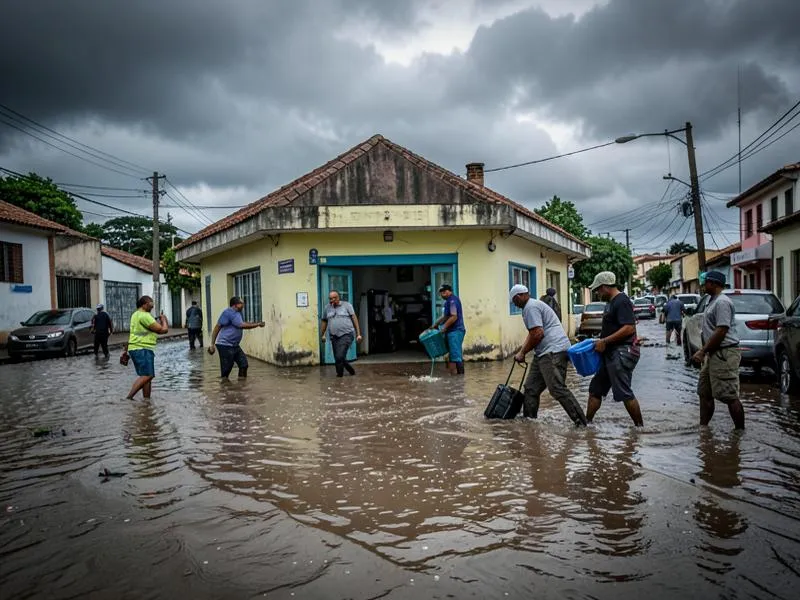
Extreme Precipitation & Flooding
Physical access cutoffs, localized equipment destruction, urban transit paralysis, grid blackouts, and telecommunications severance. The single most recurring disaster across urban centers and the least addressed in continuity playbooks.
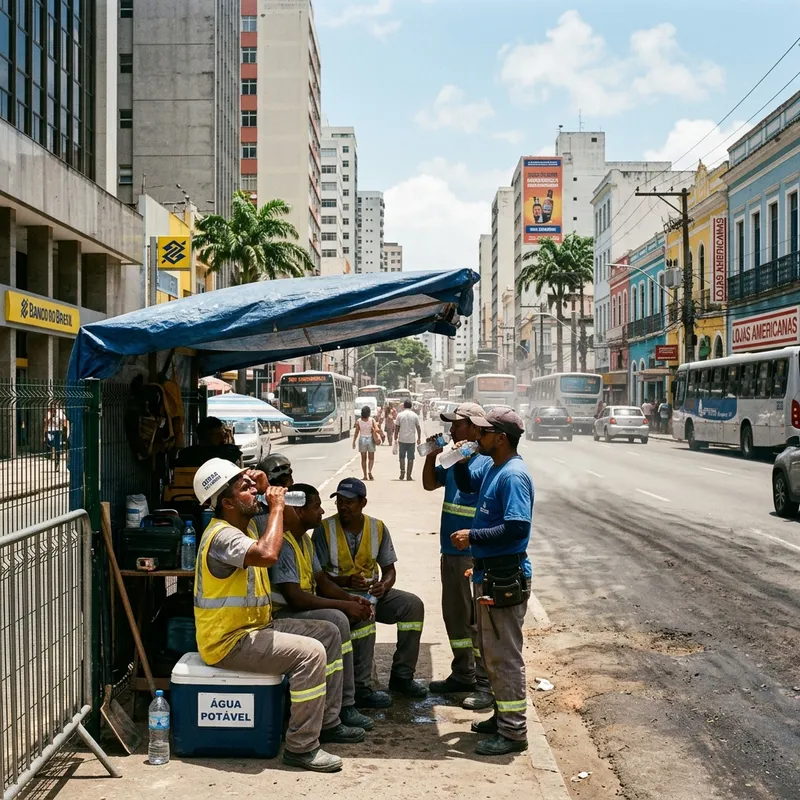
Severe Heatwaves & Thermal Spikes
Acute cognitive fatigue, severe health hazards for field crews, building chiller failures, grid brownouts from air conditioning peaks, and thermal server throttling.
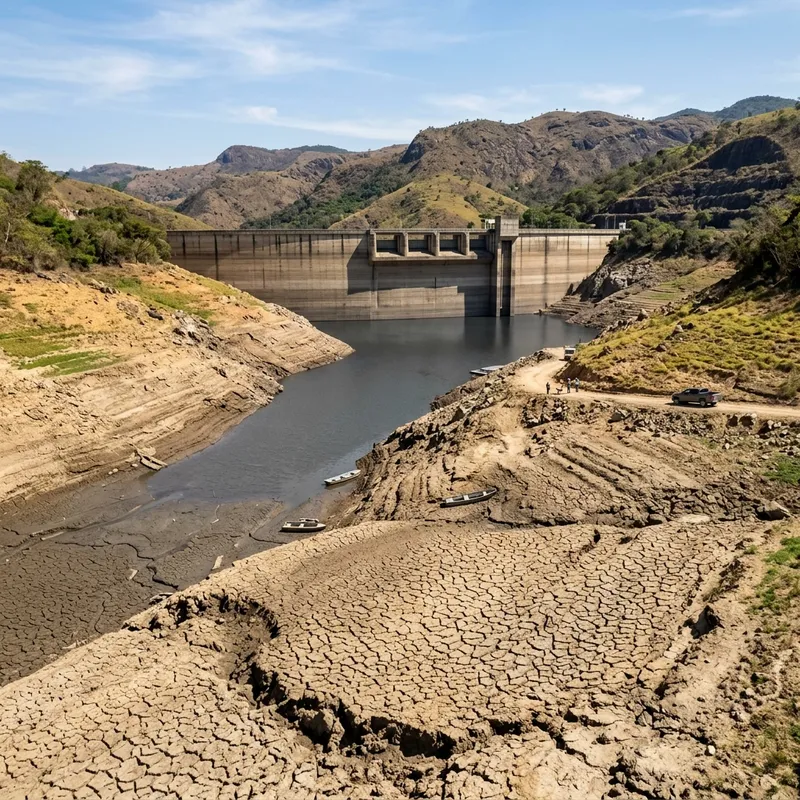
Drought & Hydrological Stress
Industrial water rationing, data center cooling constraints, hydro-dependent electricity rate surcharges, and direct downstream purchasing contractions across agribusiness clients.
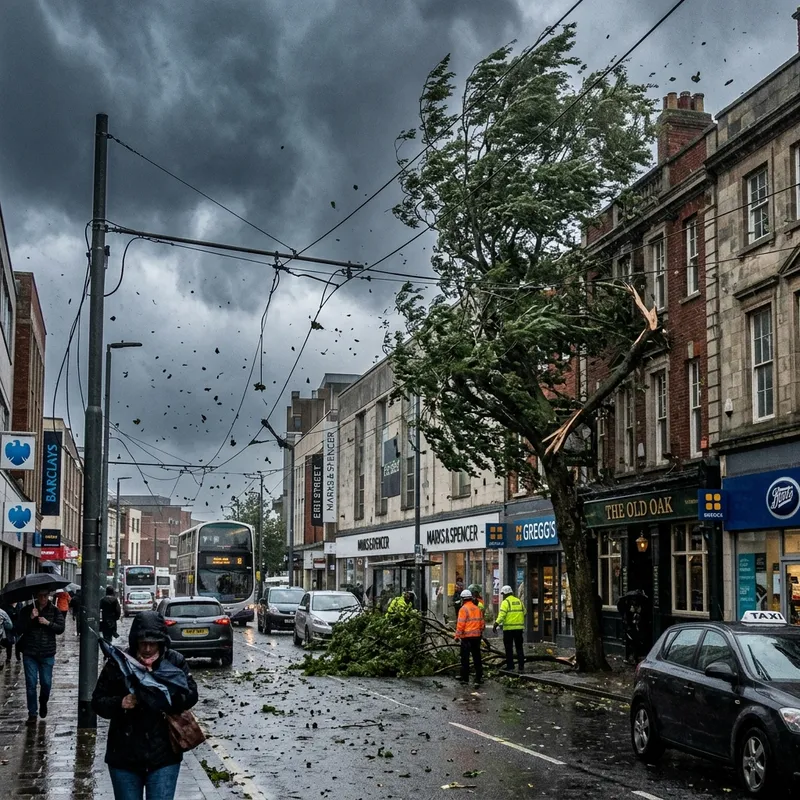
Windstorms, Hail & Coastal Surges
Overhead power and fiber line ruptures, structural roof damage, port logistics closures, and cascading delivery delays across contracted client commitments.
How to map exposure across personnel, digital infrastructure, and supplier tiers?
Mapping climate exposure is an exercise in auditing addresses and physical dependencies that fits on a single spreadsheet. The governing diagnostic question applies to every asset: if this node goes dark for 72 consecutive hours, what business functions fail, what is the daily financial burn, and what tested failover is already deployed? Without that third column, a risk map is merely an inventory of anxiety.
Public geospatial databases provide remarkable diagnostic power at zero cost. The WRI Aqueduct tool visualizes localized baseline water stress, drought recurrence, and riverine flood probabilities by exact latitude/longitude. Civil defense archives detail municipal disaster history, while IPCC regional projections outline expected climatic trajectories for the geographic zones where your team, partners, and vendors reside. Synthesizing these tools takes under a single day of focused analysis.
For human capital, auditing must drill down to neighborhood geography. A distributed remote team is not automatically resilient: if seven of your ten core engineers live within the same metropolitan basin, a single severe weather event can knock your entire engineering organization offline. Discretely inventory commute dependencies, local grid reliability, and dependent care realities — managed with strict privacy consent — because these realities dictate whether emergency remote work succeeds or collapses.
| Exposed Dimension | Diagnostic Audit Points | Pre-Engineered Failover Solution |
|---|---|---|
| Personnel & Teams | Geographic clustering of talent, commute transit vulnerabilities, residential grid/internet stability, field teams exposed to thermal stress | Distributed staff scheduling with company-provisioned mobile hotspots, emergency power stipends, formal protocols suspending field operations during heat/flood alerts |
| Facilities & Real Assets | Flood zone elevation, municipal drainage history, server/power socket elevation, comprehensive hazard insurance coverage, backup generator status | Pre-negotiated flexible coworking access in alternate zones, mobile emergency workstation kits, updated commercial insurance policies covering extreme weather losses |
| Digital Infrastructure | Active cloud availability zones, geographical database replication, verified restore speeds, dependency on single fiber routes or DNS providers | Multi-region active-passive cloud architectures, bi-annual timed disaster recovery restore drills, secondary redundant telecom links with automated cellular failover |
| Critical Supplier Tiers | Geographic coordinates of vendor facilities, water and flood vulnerability, vendor continuity certifications, replacement lead times | Dual-sourcing agreements for vital dependencies, safety stock buffers for single-source parts, contractual mandates requiring immediate disruption notifications |
| Clients & Revenue Base | Revenue concentration across climate-vulnerable geographies or sectors, seasonal climate demand sensitivity, contractual uptime penalties | Geographic portfolio diversification, transparent client outage communication playbooks, realistic contract SLAs accounting for climate force majeure |
| Regulatory & Market Shifts | Enterprise client ESG supplier requirements, impending carbon border adjustments, electricity tariff escalation, statutory audit mandates | Audit-ready energy and continuity dossiers, standardized vendor RFP answers, annual reviews of energy procurement contracts and Scope footprints |
Personnel Safety Precedes Output
No business continuity goal supersedes employee safety. Establish definitive protocols that delegate immediate local authority to suspend commutes and field activities without awaiting central managerial approval.
Eliminate Single Points of Failure
One cloud provider, one primary host zone, one telecommunications trunk, or an unverified backup snapshot: every singularity is an impending outage. Redundancy only counts as resilience once verified through physical stress drills.
Audit Vital Supply Tiers
The five core external vendors without whom your service halts must have documented facility locations, audited lead-time guarantees, and pre-screened alternative suppliers before crises erupt.
How to integrate climate risk into business continuity planning?
The most destructive mistake an enterprise can make is drafting a detached 'climate plan'. ISO 22301 provides the rigorous architecture for business continuity, and climate should integrate as an operational disruption vector alongside cyber incidents, critical supplier failures, and key personnel losses. A unified business continuity plan gets executed under pressure; dual parallel plans create chaos when minutes count.
The foundation is the Business Impact Analysis (BIA): map every core customer-facing process, quantify its Maximum Tolerable Period of Disruption (MTPD) and Recovery Point Objective (RPO), and only then engineer technological failovers. This separates disciplined continuity from wishful improvisation: contingency budgets scale to what the business commercially tolerates, not what engineering finds aesthetically elegant.
Four essential mechanisms must be codified: designated operational roles with assigned secondary deputies (since primary leads may be the ones without power), offline-accessible crisis contact trees, clear objective tripwires defining activation and de-escalation, and post-mortem incident logging to ensure lessons improve subsequent drills.
Pre-Disaster Readiness Phase
- Conduct Business Impact Analysis detailing Maximum Tolerable Downtime across all core client workflows.
- Maintain an updated Exposure Register auditing staff residences, facility coordinates, and tier-1 vendor nodes.
- Contract operational redundancies: secondary cellular failovers, emergency battery packs, multi-region cloud snapshots.
- Define primary operational command roles, secondary deputies, and offline-accessible contact rosters.
- Review seasonal meteorological calendars prior to regional storm, flood, and extreme heat cycles.
Active Response & Recovery Phase
- Execute objective activation criteria granting local team leads immediate authority to suspend operations.
- Dispatch standardized client and stakeholder status notifications within the initial two hours of disruption.
- Transition operations into pre-defined Minimal Viable Service modes focusing strictly on revenue-critical workflows.
- Maintain comprehensive timestamps logging decisions, financial impacts, downtime durations, and contract deviations.
- Conduct a formal post-incident review within 30 days to update risk registers and adjust engineering failovers.
Which climate scenarios and indicators should startups monitor?
Climate scenario analysis sounds intimidating, but for a startup it translates into a structured two-hour strategic review per year. IFRS S2 mandates that firms assess the resilience of their operating model against divergent future climates. For this, three qualitative narrative scenarios suffice: an Aggressive Transition scenario (rapid carbon pricing, strict ESG procurement mandates, volatile utility costs), an Intermediate scenario (slow, fragmented global policy shifts), and an Acute Physical Impact scenario (recurrent extreme weather battering local operations).
Across each scenario, interrogate three questions: how does this alter our unit cost structure, how does this shift addressable customer demand, and how does this affect our capability to deliver? The answers generate actionable decisions: shifting data centers, dual-sourcing critical hardware, revising power contracts, or launching adaptation products for affected clients. The objective is identifying robust decisions that succeed across multiple plausible futures.
Operational indicators must remain concise and monitored on regular governance cadences. Resilience metrics feature an advantageous characteristic: nearly all exist within existing financial, DevOps, or procurement ledgers. The matrix below defines the core metrics suited for a quarterly startup dashboard.
| Operational Metric | Calculation Methodology | Strategic Diagnostic Purpose |
|---|---|---|
| Climate-Induced Downtime Hours | Cumulative quarterly downtime hours logged under verified environmental root causes | Converts meteorological disruption into an operational downtime number directly comparable to cyber or infrastructure outages |
| Revenue at Risk in High-Hazard Zones | Percentage of annual contract value derived from clients or facilities situated in WRI high-hazard flood/drought zones | Surfaces geographic concentration risks that traditional sales pipeline metrics completely obscure |
| Single-Source Critical Vendors | Absolute count of core Tier-1 suppliers lacking an approved secondary alternative | Identifies the single vulnerability whose mitigation produces the fastest reduction in overall business operational risk |
| Timed Data Recovery Speed (RTO) | Chronometered full disaster recovery database restore drills executed at least semi-annually | Transforms speculative backup confidence into an empirical, audit-defensible recovery timeframe |
| Critical Function Energy/Network Coverage | Percentage of essential staff equipped with verified auxiliary battery banks and cellular hotspot failovers | Determines whether remote engineering and support teams can maintain production during prolonged regional blackouts |
| Energy Intensity & Tariff Sensitivity | kWh consumed per output unit and percentage of operational spend vulnerable to peak tariff spikes or carbon levies | Directly links physical energy consumption with bottom-line gross margin erosion from transition regulations |
| Staff Geographic Concentration Ratio | Maximum percentage of employee headcount residing within a single metropolitan flood or power basin | Predicts the systemic probability that a single regional disaster disables the vast majority of the company simultaneously |
How do cloud architecture, remote work, and redundancy reduce vulnerability?

The positive reality for digital startups is that the three most effective resilience levers are cost-effective and readily available. Cloud computing eliminates the vulnerable on-premise server room and unlocks multi-region geographic distribution. Remote work removes the single office choke-point, keeping teams operational when municipal transit paralyzes. Pre-contracted redundancies transform disasters into minor inconveniences: secondary data trunks, portable battery stations, multi-region failovers, and secondary component suppliers.
The hidden risk is that each lever introduces new secondary dependencies. Single-region cloud hosting merely re-homes the single point of failure — and hyperscale data centers depend heavily on local grid power and regional water basins for evaporative cooling. Remote work transfers infrastructure reliance to residential power and consumer ISP links, which rarely feature battery backups or redundancy. A database backup that has never undergone timed recovery is not a backup: it is an unverified file.
The pragmatic criteria governing capital deployment compares the Maximum Tolerable Period of Disruption (MTPD) from your Business Impact Analysis against the verified recovery time of each dependency. Where actual recovery exceeds tolerable downtime, capital investment is mathematically justified. Where recovery is faster, no further capital should be expended — keeping resilience within seed-stage budgets.
- Operate revenue-critical customer workflows across at least two independent cloud availability zones or regions.
- Execute and chronometer a full database restore from bare backups semi-annually, archiving timestamps.
- Equip essential support and engineering leads with auxiliary battery power stations and mobile cellular hotspots.
- Maintain emergency personnel contacts, infrastructure credentials, and the continuity manual in an offline-accessible vault.
- Audit and approve a secondary supplier for every single-source hardware component before supply lines seize.
- Proactively manage geographic talent dispersion during hiring to prevent urban clustering in vulnerable basins.
Checklist for stress-testing disaster responses against extreme weather
An untested continuity plan is merely an aspiration on paper. The quarterly tabletop exercise below takes just two hours, structured around a pre-selected crisis scenario: severe municipal flooding blocking main transit corridors, a 72-hour metropolitan grid failure, total downtime across a primary cloud region, or the sudden insolvency of your anchor supplier. The foundational rule is strict: no theoretical debates; each participant must physically execute their assigned role and log actual execution times.
Simulated Disaster Activation
- Select a realistic crisis scenario and trigger the drill unannounced, including off-shift hours.
- Declare the crisis strictly via secondary communication channels without relying on standard office chat.
- Activate primary incident leads and confirm secondary deputies where primary leads are simulated unavailable.
- Throttle team workflows into Minimal Viable Service mode with strictly prioritized operational scopes.
Technical Failover Validation
- Initiate a timed database restore from cold snapshots and log the exact duration until service restoration.
- Execute live traffic rerouting to the secondary cloud region and validate transactional integrity end-to-end.
- Switch critical support terminals to emergency battery stations and cellular hotspot connections.
- Verify that team leads can access emergency customer contact lists and credentials completely offline.
Executive Post-Mortem & Remediation
- Benchmark empirical recovery times against the maximum tolerable interruption thresholds defined in the BIA.
- Catalog the top three operational bottlenecks discovered, assigning explicit remediating owners and 30-day deadlines.
- Update the Exposure Register and continuity manual to reflect lessons learned during the drill.
- Archive the official exercise audit report: this documentation directly satisfies enterprise client security questionnaires.
Resilience is an executive management decision made before disaster strikes
Nothing outlined in this guide demands corporate enterprise budgets. It demands the operational discipline to map physical addresses and dependencies, quantify tolerable interruption thresholds, contract the targeted redundancies that close critical gaps, and rehearse failovers once per quarter. The difference between an enterprise that crumbles and one that operates seamlessly through extreme weather is rarely the capital invested: it is the existence of an alternative that someone has already practiced.
Furthermore, robust resilience delivers an unexpected commercial return. A high-growth startup capable of presenting a verified exposure map, a certified business continuity protocol, and documented disaster drill audits resolves enterprise client vendor questionnaires in hours rather than weeks, secures superior commercial insurance rates, and discusses climate vulnerabilities with tier-one investors from a posture of engineering excellence. Thorough resilience preserves operational continuity and, in the process, becomes a formidable sales differentiator.
Referências
- IPCC. Sixth Assessment Report (AR6). Consolidates global climate science and details physical climate risks across regional systems and warming scenarios, illustrating that extreme weather frequency has permanently escalated and must serve as an operational planning baseline. Consult IPCC Sixth Assessment Report (AR6)
- IFRS FOUNDATION. IFRS S2 Climate-related Disclosures. The global accounting benchmark mandating standardized disclosures on governance, strategy, risk management, and metrics, requiring firms to evaluate physical and transition risks across supply chains. View IFRS S2 Climate Disclosures
- TCFD. Recommendations. Established the four-pillar governance architecture adopted by global capital markets to categorize climate risks into physical and transition vectors across defined operational time horizons. Review TCFD Recommendations
- WRI. Aqueduct Water Risk Atlas. Enables organizations to evaluate localized water stress, drought recurrence, and riverine flood risks for any global address or vendor node across present and future climate scenarios. Explore WRI Aqueduct Atlas
- ISO 22301. Business Continuity Management. Provides the international standard for business continuity management: Business Impact Analysis, Maximum Tolerable Period of Disruption, emergency failover plans, and periodic operational testing. Consult ISO 22301 Continuity Standard