

Sustainability Is Not Enough: Now Is the Time for Regeneration
Sustainability reduces harm. Regeneration gives back more than it takes. Learn how to measure your company's impact with SROI, re-evaluate operations, and replace inputs to thrive under resource scarcity.
The Challenge of Entrepreneurship Under Resource Scarcity
Founders building in emerging markets learn early to live with scarcity. Capital is scarce, credit is hard to come by, qualified talent is limited, and — most critically for this discussion — natural resources can no longer be extracted without severe consequences. The average startup founder operates with tight cash flow, a lean team, and a squeezed operation. This context, while seemingly a disadvantage, is precisely what turns entrepreneurship into a fertile proving ground for regeneration.
For decades, corporate environmental discourse revolved around the word sustainability: reducing emissions, minimizing waste, cutting negative impact. The problem is that sustainability has a ceiling — at best, it guides a business to a state of zero net impact, effectively "breaking even" with the planet. And zero, in 2026, is no longer enough. The Intergovernmental Panel on Climate Change (IPCC, 6th Assessment Report) made it clear that we must actively remove historical carbon emissions, restore degraded ecosystems, and bring back biodiversity. The defining verb of our decade is no longer "to sustain" — it is to regenerate.
This article is a practical guide for founders, executives, and leaders who want to go beyond superficial ESG checklists. We will cover the four core pillars we apply across startups accelerated at Shinier: measuring real impact, re-evaluating what the business does, replacing what it consumes, and proving that resource scarcity is, ultimately, a strategic competitive advantage.
Sustainability Is Not Enough: Now Is the Time for Regeneration
Sustainability emerged into mainstream business in the late 1980s via the Brundtland Report (World Commission on Environment and Development, 1987), defining the goal as "meeting the needs of the present without compromising the ability of future generations to meet their own needs." That concept set a new benchmark for industry at the time — but, as Montibeller Filho (2004) highlighted, "sustainable development" often devolved into a rhetorical myth, labeling anything that simply polluted slightly less as "sustainable."
Romeiro (2003), in his political economy framework of sustainability, demonstrates a fundamental practical distinction between "sustaining" (maintaining existing balance) and "regenerating" (restoring capacity to the ecosystem). Regeneration acknowledges that our baseline is already degraded — and that a company's responsibility is to restore health.
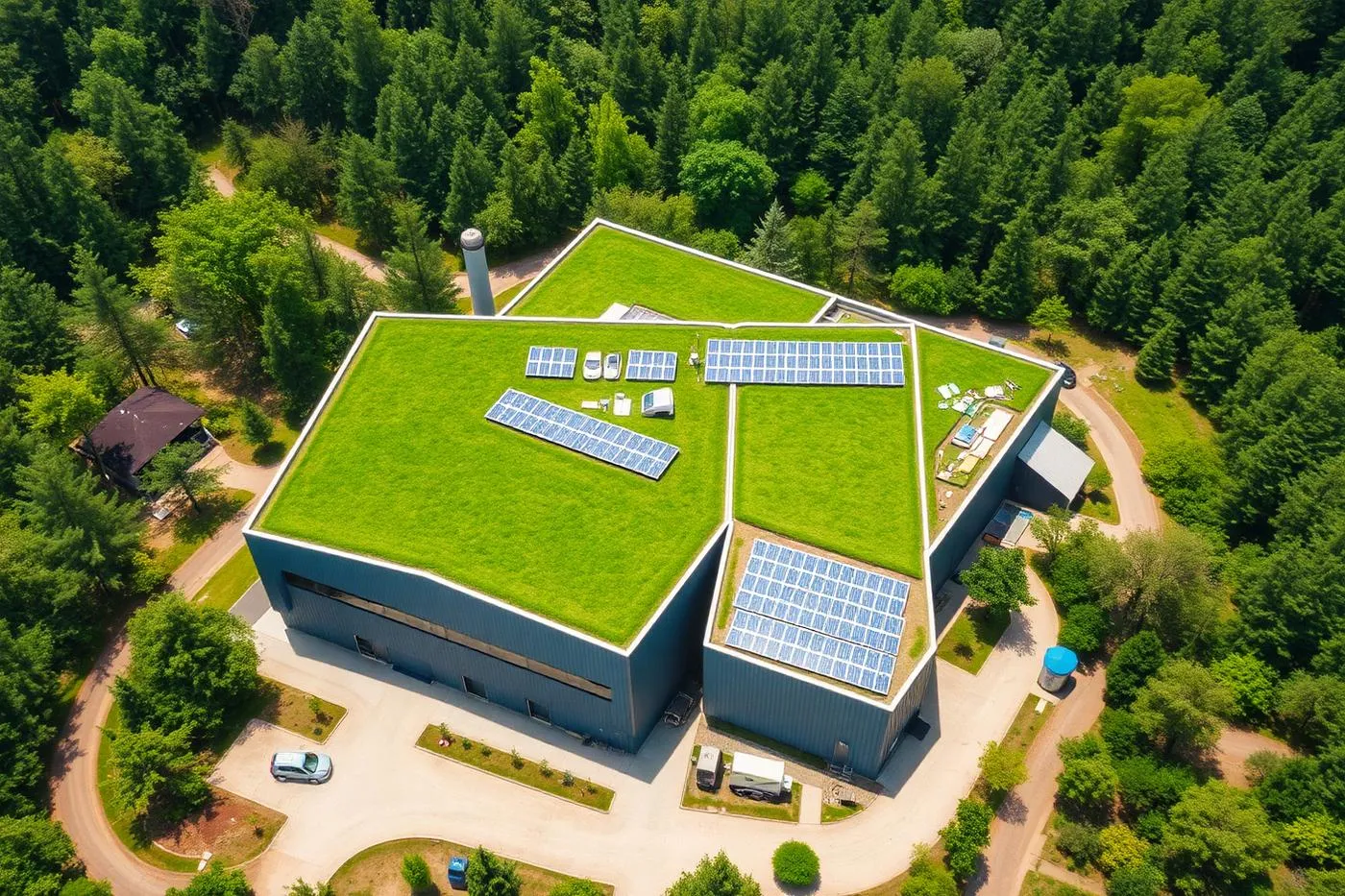
Sustainable
Reduces emissions, water usage, waste, and energy consumption.
Targets zero impact — breaking even with the planet.
Focuses on doing less harm.
Regenerative
Restores soil, water systems, biodiversity, and community wealth.
Targets net positive impact — returning more than extracted.
Focuses on doing more good.
How to Measure Your Company's Regeneration

Regeneration cannot exist without rigorous metrics. If you cannot demonstrate in hard numbers what you returned to the environment and society, you are merely practicing greenwashing. The most robust methodology available today for this translation is SROI — Social Return on Investment, sistematized in Latin America by Kisil & Fabiani (2016).
SROI converts social and environmental outcomes into monetary terms, yielding a clear ratio: for every $1 invested in operations, how many dollars were created in total value (economic + social + environmental). An SROI ratio of 4:1, for instance, means every dollar invested yielded four dollars of net value returned to the ecosystem.
The 6 Steps of SROI Applied to a Startup
- Establish scope and map stakeholders. Who is impacted by your operations? Employees, suppliers, local communities, customers, natural ecosystems?
- Map outcomes. Concrete changes: formal jobs created, restored land hectares, kg of CO₂ sequestered, liters of water saved.
- Gather evidence. Collect before/after data, beneficiary interviews, IoT sensor feeds, utility bills, external audits.
- Assign financial proxies. Use public financial proxies: average regional wages, municipal water treatment costs, regulated market carbon prices.
- Establish counterfactual and attribution. How much of this impact would have happened anyway? How much is directly attributable to your company?
- Calculate the SROI ratio and publish. Complete transparency is what separates genuine impact from marketing rhetoric.
Complementary frameworks to consider: B Impact Assessment (B Lab, free, foundation for B Corps), IRIS+ (GIIN, global impact metric standards), and GHG Protocol (standardized greenhouse gas emissions inventory).
Re-evaluating Company Activities Sustainably
Before launching a new product line, pause and look inward. Nassif et al. (2004), at XXVIII ENANPAD, described the profile of the "leader committed to sustainable development principles": an executive who challenges established routines, tolerates ambiguity, and actively redesigns operational workflows. This exact exercise belongs to every founder — auditing existing activities and asking, item by item: does this process still make sense?
1. Map the Value Chain
2. Apply the 3Rs + 1 Rule
3. Redesign Workflows
Replacing or Reducing Inputs for Positive Impact
Regenerative engineering begins where costs hurt most: raw materials. The largest lever for slashing environmental footprint while simultaneously reducing unit costs lies in optimizing what enters production. It isn't just about plastic vs. paper — it requires reviewing your bill of materials line by line.
A practical case we regularly navigate with Shinier portfolio startups: replacing single-use plastic packaging with sugarcane bagasse pulp, replacing synthetic adhesives with structural folding, swapping long-haul road freight for regional fulfillment hubs, and running digital infrastructure on 100% renewable energy regions (providers like AWS, Google Cloud, and Azure offer certified green regions). Every replacement cuts emissions and almost invariably unlocks high-value conversations with impact investors.

Decision Matrix: Replace, Reduce, or Eliminate
| Input Type | Priority Action | Practical Example |
|---|---|---|
| Electricity | Replace | 100% renewable power contracts + rooftop solar PV. |
| Single-use plastic packaging | Eliminate / Replace | Sugarcane bagasse pulp, recycled kraft, deposit returnables. |
| Long-haul road freight | Reduce | Regional hubs, freight aggregators, rail transport where available. |
| Industrial process water | Reuse | Closed-loop cooling circuits, greywater reclamation. |
| Enterprise hardware | Extend Lifespan | Refurbished devices, circular leasing, post-cycle donation. |
Inspiring Cases: From Scarcity to Regeneration
On Shark Tank Brazil, a show we frequently reference when analyzing pitch dynamics, numerous founders have demonstrated how scarcity fuels breakthrough innovation. A recurring example is bioeconomy startups — ventures turning agricultural waste into high-value raw materials — and reverse logistics platforms returning packaging directly back to industrial supply chains. A standout episode we highlight to our founders features investors debating the exact trade-offs between rapid scaling and regenerative models (watch on YouTube).
Other notable emerging-market cases: Mãe Terra (organic foods with full farmer traceability), Boomera (reverse logistics and post-consumer waste recycling), Insecta Shoes (footwear crafted from recycled post-consumer fabrics), Symbiosis Investimentos (native reforestation as a financial asset), and Justa Trama (agroecological cotton cooperative network spanning farm to garment).
What unites all of them: initial capital constraints forced a structural redesign of the product, and that redesign became their core competitive moat. Bootstrapping and regeneration aren't opposing forces — they are natural partners.
The Regenerative Entrepreneur Is the Founder of Our Era
Sustainability was the baseline commitment of the 20th century. Regeneration is the defining opportunity of the 21st century. Building under resource scarcity is not a penalty — it is training. The founder who learns to run lean, measure real impact, rethink legacy processes, and substitute inputs presents investors with a narrative that goes far beyond a superficial ESG slide: it forms the foundation of their entire business model.
At Shinier, we believe every new startup has the opportunity — and responsibility — to be born regenerative. It is significantly cheaper to design this way from day one than to retrofit a legacy operation later. And frankly, it makes for a far more compelling journey.
Ready to Build Your Regenerative Startup?
At Shinier Accelerator, use guided tools to design your business model, impact metrics, and roadmap — starting right from your MVP.
Join Shinier AcceleratorReferências
- KISIL, M.; FABIANI, P.M.J. Social Return on Investment (SROI): methodology translating social impact into financial value for investors. Pensamento e Realidade, v.3, 2016.
- MONTIBELLER FILHO, G. The myth of sustainable development: environment and social costs in modern commodity production. Florianópolis: Ed. da UFSC, 2004.
- NASSIF, V. M. J.; et al. Who is the leader committed to sustainable development principles? XXVIII National Meeting of Graduate Programs in Business Administration (ENANPAD), Curitiba, 2004.
- ROMEIRO, A. R. Economics or political economy of sustainability. In: MAY, P. H.; LUSTOSA, M. C.; VINHA, V. Environmental Economics. Rio de Janeiro: Elsevier, 2003. p. 1-29.
- Shark Tank Brasil Pitch on regeneration, resource scarcity, and impact business. Watch on YouTube
- IPCC Sixth Assessment Report (AR6) — Climate Change 2023: Synthesis Report. Geneva: IPCC, 2023. View Report